Avigo10

IF you knew what most digital cameras back in 1999 looked like – and how much they would cost back then – you’ll quickly understand that it’s rather astonishing to have these digital images from my beloved TexasInstruments AVIGO10 PDA I’ve just unearthed from a sub-sub-sub-directory on my harddisk.
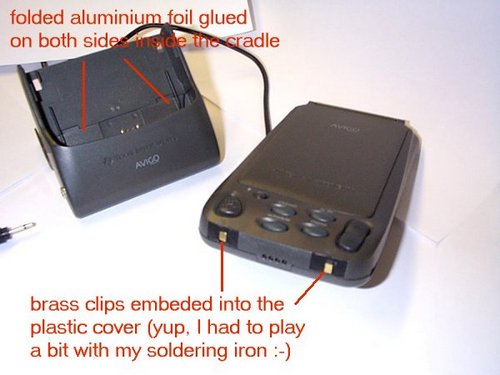
Avigo02

It’s a rather childish mod/hack that I had done on this outdated PDA way back in 1999 and of which I was reminded just a few minutes ago while googling for a link to this weekend’s AfrikaCamp in Vienna.

Mzeecedric of m.zung.us and I will attend this event and I’ll also try to cover it on my blog if everything works out as planned. I am not expecting too much though, just an open meeting and exchange with interested and active folks in Europe (or let’s say Austria and Germany) who also have some sort of Mal d’Afrique on their agenda or anything else related to this matter.

Coming back to the mod: while googling for the link, I stumbled upon Robert Lender’s website – a fellow blogger who had contacted me way back in 1999 on this hack and had integrated it on his page dedicated to this PDA. I guess I may even have his e-mail somewhere. Ok, now that’s 10 years ago, and if you ask yourself what you did in 1999, you’ll probably say that you’d been online via CompuServe or AOL and probably also hosted your site on Ethan Zuckerman’s Tripod site. Yup. 1999. Long time ago.

This post is dedicated to Robert and it will be especially interesting to see a face behind this contact whose name has been around for such a long time.

The original page on http://kikuyumoja.de/avigo has been offline for quite some time now, but I just copied everything into a PDF.
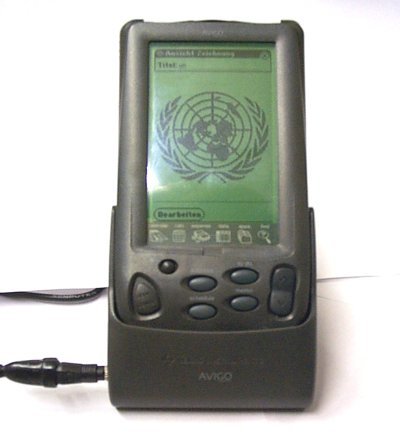
Avigo01

I btw still have this PDA at home. Compared to my friends who owned stupid Palm PDAs, the Avigo10 was a bit cheaper and not as popular as a Palm Pilot PDA, hence less software being available for this product. It also lacked the marketing backup from TI who quickly dropped this product from their product line for unknown reasons. Kinda sad, especially since this PDA came with a serial connector and could be hooked up to a modem which turned it into a great telnet device among other cool hacks.

Actually, it’s kinda worrying to see that even now in 2009, most mobile devices still lack such basic services (telnet, ssh, etc.) and charge you extra for a comfort we already had in 1999. As for the issue of power consumption, I think that we’ll also need to have a revolution on the energy side: something where we will not only see more efficient and energy-saving devices with smaller CPUs, but instead also devices that generate the energy the moment you need it and thus reduce our needs for stronger batteries.

@T.H.User: FFM, 1999, Nordi, MediaMarkt! Erinnerst Du Dich noch? Das Gerät hatten wir damals zusammen gekauft! :-)

wising up

Standards vs. ergonomy

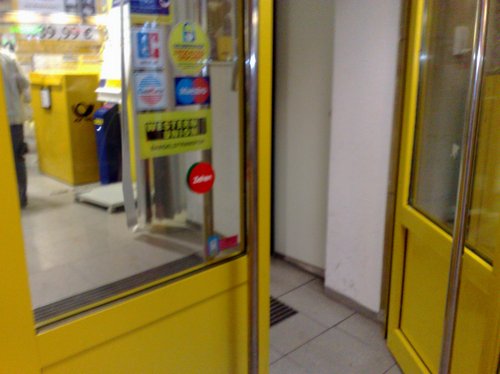
The main entrance door to the Deutsche Post branch office at Frankfurt railway station.

05012009232

There’s a fire safety regulation in German law which says that such doors have to open to the outside so that in case of emergency, the panic crowd may escape without any obstacles.

Despite of this regulation and although most doors in shops and offices are designed to this standard, many customers stil PUSH the door to the inside until they realize it opens by pulling the handle. There even is a sticker that says ZIEHEN (= pull).

Always reminds me of Gary Larson’s “School for the Gifted“.

Our future is in Africa

05012009233

An election poster for the upcoming elections in the Federal State of Hessen. Instead of the usual mugshots of fugly politicians, these guys came up with the image of a tractor, OPEL logo, the Transrapid, a nuclear power plant and some messages that are supposed to attract floating voters.

While I think that Europe and Africa should team up and support each other, the “Bürgerrechtsbewegung Solidarität” (BüSo) is in fact a very small right wing party with quite extreme ideologies. Germany, Europe, the world may indeed need to rethink what really matters – but voters should also inform themselves about the political parties and understand the real message behind such propaganda + how they are being lured into the world of extremists.

Their candidate talks about the “Africanisation” of Germany – e.g. how living standards have deteriorated over the years, similar to many African states (sic!) – and how the German economy nowadays relies on products from the outside.

While most parties actually suck and have similar concepts, it’s still much better to have a working democracy instead of fashists from the US who try to undermine Europe. Somehow similar to what Declan Ganley does in Ireland, but on another level.

paper world

05012009231

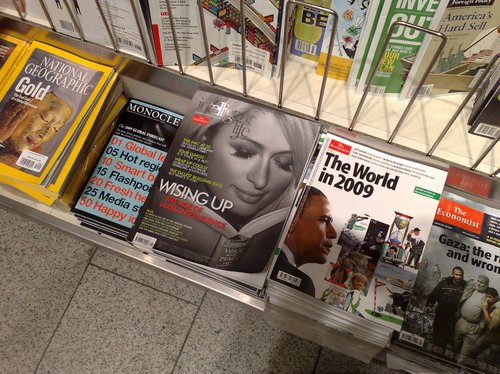
Paris Hilton on the cover of “intelligent life“, a lifestyle magazin by The Economist.

Are you bored enough to read or at least page through any lifestyle magazine these days IF instead there’s something else called internet?

And two more questions on the traditional media (e.g. print):

a) How often do you, as a reader of this blog, read printed lifestyle magazines? And where? Do you buy them?

b) From my perspective as an internet geek (or “internetty”, as a colleague called it one day): where do you read, hear, see the general news? Do you read a (daily) newspaper on a regular basis and supplement this with some extra magazines? Or have you completely moved your news-addiction to the onlinesphere?

Am asking because I think that it’s especially the older generation that still prefers print editions + have been wondering on how this impacts on society in general.

telefonische Erreichbarkeit zum Festnetztarif

In 2008 haben die meisten Internetsurfer ein Konto bei Skype, Gizmo oder anderen sog. Internet Messaging Diensten. Der große Nachteil von Skype & Co ist jedoch, dass man nur online erreichbar ist (PC muss online sein), eine Weiterleitung auf ein Telefon kostenpflichtig ist und/oder bei Skype zB eine lokale Nummer – wenn überhaupt – nur gegen Aufpreis erhältlich ist. Außerdem ist Skype recht teuer – mal abgesehen davon, dass niemand weiß, ob der Dienst wirklich so sicher ist. Mein Kumpel KP sagt mir, dass Skype in China abgehört wird. Für unsere instant messaging Kommunikation zwischen Dland & China verwenden wir daher einen privaten & verschlüsselten Server in Deutschland.

Wem das jetzt alles zu kompliziert ist und wer einfach nur telefonisch über eine Festnetznummer erreichbar sein möchte, kann sich entweder einen Telefonanschluss legen lassen, einen entbündelten DSL Anschluss mit VoIP Telefonnummer beantragen oder einen O2 Handyvertrag mit zusätzlicher Festnetznummer für den Bereich im Umkreis des Wohnortes klarmachen. All diese Varianten gelten aber nur für einen festen Wohnsitz.

Wer wie ich öfters umzieht, mobil bleiben muss aber trotzdem auf den Komfort einer Festnetznummer nicht verzichten möchte, dem sei folgende Alternative ans Herz gelegt, die ich nach 4 Jahren Gebrauch wirklich nur empfehlen kann:

Sipgate.de

sipgate logoBei Sipgate.de gibt es nach der Registrierung & Verifizierung durch ein Ausweisdokument eine kostenlose Festnetznummer (sofern verfügbar), über die man dann erreichbar ist.

Und zwar weltweit.

Früher hatte ich hierfür immer eine Bremer Telefonnummer, mittlerweile habe ich eine Frankfurter Nummer beantragt – der Wechsel fand innerhalb von 2 Werktagen statt! Neben Sipgate gibt es in Dland natürlich noch ein paar andere Anbieter, allerdings gibt es nicht überall eine lokale Festnetznummer. Lokal bedeutet hier: eine 069 Vorwahl für Frankfurt am Main (statt bundesweit einheitlicher 0180er Nummer).

Weltweit bedeutet: überall wo ich einen (breitbandigen) Internetzugang habe, bin ich über meine Frankfurter Telefonnummer erreichbar. Wenn ich also über die Weihnachtsfeiertage nach Bremen fahre, kann ich mein Telefon dort anschließen und bin weiterhin über die Frankfurter Nummer erreichbar. Gut für mich, gut fürs Geschäft. Weil: eine Festnetznummer ruft man schnell mal an, eine Mobilfunkrufnummer dagegen rufen nur diejenigen ungehemmt an, die keine andere Möglichkeit haben oder für die ein Anruf netzunabhängig gleichteuer ist. Anrufe ins Festnetz sind also oft günstiger – daher möchte ich auch übers Festznetz günstig erreichbar sein.

Hier in FFM habe ich ein Targa VoIP Telefon direkt über LAN an den DSL Anschluss des Vermieters angeschlossen. Wer kein eigenständiges VoIP Telefon hat (gibts bei eBay ab 30,- EUR), das so wie mein Telefon ohne den Umweg eines aktiven Computers direkt an den DSL Anschluss angeschlossen werden kann, greift alternativ zu seinem besseren Nokia Handy, dem iPhone oder anderen Handys, für die es eine Softwarelösung gibt. Um die ganze Funktionalität auszureizen, habe ich den Sipgate Anschluss natürlich auch auf meinem Nokia N95 Handy konfiguriert. Wenn ich jetzt also meine Frankfurt Festnetznummer anrufe, klingelt es gleichzeitig auf meinem VoIP Telefon in Bremen (natürlich grad nicht eingesteckt), auf meinem Targa VoIP Phone in Frankfurt und auf meinem Handy. Ideal!

Zwei weitere Gründe, die für Sipgate sprechen:

a) die Sipgate Website ist komplett personalisiert:
Konfigurationseinstellungen werden pro Endgerät personalisiert dargestellt, d.h., ich sehe eine Seite mit Screenshots für zB mein Handy und den nötigen Einstellungen, die nur für mein Sipgate Konto gelten. Das ist echt super praktisch!

b) Wer lediglich erreichbar sein möchte, zahlt nix.
Erst wenn man selber über Sipgate heraustelefonieren möchte, muss man sein Konto bei Sipgate aufladen. Dies kann später auch automatisch geschehen, zB bei Unterschreitung des Guthabens eines bestimmten Mindestbetrages.

Selbstverständlich gibt es bei Sipgate auch einen netzbasierten Anrufbeantworter, eine Faxfunktionalität (Faxe verschicken & empfangen) und eine eigene (vorkonfigurierte!) Softwarelösung für den PC.

Wer wirklich nur günstig übers Internet telefonieren möchte und wem die Erreichbarkeit über eine Festnetznummer egal ist, fährt natürlich mit InternetCalls besser. InternetCalls gehört zur Betamax GmbH, die auch VoIPStunt , VoipBuster und SIP Discount betreiben. InternetCalls hatte ich vorletztes Jahr auf Empfehlung von TurboDave ausprobiert, eine recht günstige Alternative. Wer eine Fritz!Box am DSL Anschluss betreibt und fürs Sparen ein paar Umstände in Kauf nimmt, kann je nach Bedarf einen günstigen VoIP Anbieter aussuchen (zB Anruf von Dland nach Kenia aufs Handy kostet bei Sipgate 0,35€/min und bei InternetCalls 0,19€/min.).

Für Entwicklungshelfer und andere Exildeutsche ist ein Sipgate Konto + Erreichbarkeit unter einer deutschen Festnetznummer (bei vorhandenem Internetanschluss) meiner Meinung nach die beste Wahl. Vor allem auch deswegen, weil sich die komplette Abwicklung der Buchhaltung und Einstellungen bei Sipgate online erledigen lässt und flexibel genug ist, Änderungswünsche zeitnah umzusetzen.

Alle Jahre wieder…

“Ich möcht Dich mal sehen wie Du drei Tage lange im Altersheim hockst und Händchen hältst….aber einen Tag lang können wir das gerne mal machen.”

Das Fest der Liebe, das (christliche) Weihnachtsfest steht vor der Tür und schon jetzt im November wurde ich mit der Frage konfrontiert, “was wir eigentlich an Weihnachten machen”.

Meistens weiß man ja nicht was man möchte – sondern nur das, was man nicht möchte.

Was ich nicht möchte:

  • zu Hause doof rumsitzen und Kalorien bunkern
  • mir über den materiellen Wert von Geschenken Gedanken machen (müssen)
  • etwas Feiern, dass ich lieber das ganze Jahr über (er)leben würde: eine gerechte Welt und ein liebevolles und ehrliches Miteinander

Abgesehen von der Möglichkeit, im Kreis der verbliebenen Familie gemeinsam die Zeit totzuschlagen und damit die Nähe nachzuholen, die ich das ganze Jahr über ob des Wechsels in eine andere Stadt sträflichst vernachlässigt habe, verkommt das Weihnachtsfest als Solches für mich immer mehr zu einem Ritual wie Ostern oder – noch schlimmer – Karneval.

Statt sich über all diesen Frust zu ärgern, würde ich gerne etwas von meiner Energie abgeben und diejenigen beglücken, die damit am Wenigsten rechnen. Nur: wo?

  • Im Kinderheim in Kenia – wäre super, aber zu teuer wg Flug, Unterkunft, usw.
  • Im lokalen Alters-/Pflegeheim? – habe ich schon mal gemacht, und kommt für mich auch ganz auf die Gemeinde an.
  • Im Bahnhofsviertel in FFM bei den Drogenabhängigen?
  • ???

Ich könnte das Weihnachtsfest dieses Jahr auch einfach ignorieren und irgendwo als Hilfskraft arbeiten. Natürlich kann ich so etwas nur deswegen sagen, weil ich den 9-5 job an den Nagel gehängt, mich selbstständig gemacht habe und wir z.Zt. noch kinderlos sind. Für alle anderen bedeutet das Fest wohl vor allem 2-3 Tage bezahlter Urlaub.

Aber ganz abgesehen davon, welchen Stellenwert dieses Fest für jeden Einzelnen hat – wie werdet Ihr Euer Weihnachtsfest verbringen? Und was werdet Ihr dazu beitragen?

n.b.: Twitter

I’ve been using Twitter as a form of microblogging for quite some time now – and what I really like about it is that you constantly get to meet new people from different backgrounds with fresh ideas and different perspectives. For those who are willing to play this game, it comes close to a virtual BarCamp. Quite inspiring.

I just wanted to mention this once because I often have the impression that not everyone really understood the meaning of blogs – and a microblogging service like Twitter (as opposed to a Tumbleblog with no comment-feedback = no conversations) is a very social, albeit also limited blog version. “Yeah sure”, you may think, “what’s so new about that?”. Nothing, actually – just the pure fact alone of meeting new folks online is something that may be underrated some times.

And for this purpose, Twitter is much better than traditional e-mails, forums, Skype/IM, #irc and even Facebook. Why? Because it’s 1:1, on a personal level.

Oh, and if you’re already busy hiding your papered 1.0 business cards in this fast-paced world, create your own QR code and stick it to the back of your phone – as this post suggests. Neat!

the difference & BarCampAfrica

Back in 1998 when a group of two friends and I applied for venture capital for a smart mobile phone-related web project*, we were told that VCs in the US would normally finance 100 projects and call it a success if 10 out of 100 would take off. Contrary to that, this “success rate” was considered bad in Germany where the aim was to only finance 10 projects at the same time and then try to see that at least 7-8 of them take off.

I had a professor at university who was given many important international awards, even some under the Bush-administration – but at home his fellow colleagues made fun of him whenever he wasn’t around. Working as a member of the faculty council and being his student, I often had to defend his unordinary actions because his fellow colleagues never understood his scope of work and genius mind.

Talking about taking financial risks, my impression is that there’s a different culture in the US that almost pushes people forward and provides them with some financial backup to put their ideas in place. Not so in Europe, where you will either have to convince as a person & your reputation or have a very very tight business plan & idea of what you’re going to do. Meaning, the willingness to carry a risk is so much higher in the US than in Europe. I may be wrong on this, but that’s my impression so far.

Take the US election campaigns, for instance. With the involvement of the new media channels and blogosphere, the individual is approached at his point of interest and guided into a wonderland full of emotions, nationalism/honour and some private tidbits of the candidates.

Whenever I watch these campaign videos online, I think: well – would this work in Germany? Would such emotional campaigns also work in Europe?

Yes. Voters wouldn’t be used to that, but the majority is the same all over the world and that’s why I think what makes a strong leader isn’t lipstick, but a positive charisma that may be sold to the masses.

I am a sceptic 1/2German who does not believe the hype, but at the same time I so often wish my fellow countrymen would at least sometimes be more open to new ideas, take more risks and ease up some bureaucratic processes.

——

I tried to follow the BarCampAfrica event last night that took place at Google’s Mountain View Headquarters in the US, with streaming & recorded video sessions from Kenya, SA, Nigeria and Ghana. A quite interesting networking event. From what I heard during the panel discussions, I can only assume that the Ayittey/Shikwati approach of “less help, more trade” still needs to reach even more open minds in the US and elsewhere, and that there are indeed some countries on the African continent that are already capable of providing IT work.

2933133750 906915105c
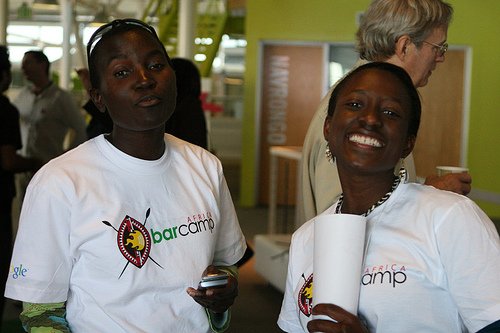
attendees at the BarCampAfrica (picture by Maneno.org)

This is exactly why I endorsed the BarCampAfrica actually taking place in the US – to reach those who still need to understand that we’re not (only) talking about water pumps, proper sanitation, food security or health issues, but instead about Africa as a market. I strongly believe that the creation of such business opportunities is the only way forward as all other approaches aren’t sustainable enough.

I am currently in the process of writing my diploma thesis (Dipl-Ing.) on “sanitation as a business in Africa”, and the basic concept is to promote (public) sanitation facilities as a business and combine that with a reuse concept. A reuse of nutrients contained within the different waste streams.

So, even though I am coming from this green/environmental engineering background, I do not follow the “…Africans need proper watsan/food/health supply before anything else”-approach. Instead, I believe that even such fundamental issues will be resolved by proper markets – not because they represent such a fair system, but because they do work and are sustainable. You may not agree on this, but then pls show me a sustainable project that has been build up with outside help and has grown into a full business.

Next we’ll need to have such a BarCampAfrica event in Europe. The only similar events I’ve seen so far were invitations on behalf of a local Chamber of Commerce that invited some permanent secretaries from African nations and key investors from Europe – where the aim clearly was to attract investment in Africa and to create a network of potential investors who would pressure local governments on opening up their trade policies. A BarCamp is different as everyone is free to join. And that’s exactly the spirit I’d like to see in Europe much more often. Take the risk, meet new people, share your ideas (for a better world, *cough cough*) and feel the “Yes we can” spirit. After all, most of the now much celebrated Web 2.0 projects started off as small 3day hacks – so even small ideas have the potential to work out and prosper.

The video transmissions via ustream.tv at one point later in the night broke off, but conversations continued on Twitter & Co. even until Sunday, so I take it that the BarCampAfrica was a real success – and much needed.

*mobile phone project: a WAP-based dictionary that would also have an sms-based frontend.

reality mining – as in “let’s face reality”

A rather older news item that triggered my interest, especially since I saw Eagle Eye last night – a Hollywood movie that deals with a super surveillance computer gone wild in a “2001: A Space Odyssey“-sense:

Mobiles are assigned a temporary anonymous number by the network called a temporary mobile subscriber identity, or TMSI, which the phone periodically transmits to advise of its location.

As the phone moves through the different regions served by different base stations, that number changes.

Path Intelligence’s approach, called FootPath, directly detects that TMSI transmission from phones. No access to the mobile networks themselves is necessary, so the information that they glean is specific to a user, but completely anonymous.

The TMSIs can only be associated with a number by the mobile operators and Path Intelligence encrypt the TMSIs that they acquire as an added level of security.

It has been approached by humanitarian workers in refugee camps, where a lack of central planning means it is often difficult to site services such as clinics where they can be best used.

The system will also be useful for researching the layout of, for example, train stations. (source)

Reality mining(Hujambo Nathan :-) – as interesting as it is (I for one would like to use such a system to see where ppl gather in cities to find the ideal location for a public toilet) – tells me that there’s still much more to mobile phone networks than what you may assume it already is. Contrary to the average communication or data connection needs, they also work as passive tracking devices and are constantly carried around by consumers. Meaning?

Mobile phones are as close as companies will ever get to a customer (unless they find a way of smuggling subliminal messages or ads in our dreams – as seen on Futuruma).

If you still believe that the mobile communication sector is just a temporary hype, this should open your eyes for the future. Don’t be fooled by current limited technologies (e.g. crippled mobile browsers) – the technology is going to evolve to a much bigger network of services that provide comfort to its users and valuable user data to some few operators who control the data.

Germany’s T-Mobile recently had a very embarrassing scandal where user data of 17 million (!) customers got “lost” a year ago, including those private numbers of celebrities & other VIPs. And this although there are already very strict data privacy laws in Germany that would normally prevent such a faux-pas.

So, obviously, it’s not only those big players like T-Mobile or Vodafone who provide the necessary mobile communication networks, but instead the few companies that collect all that gathered user data and use it for their own services. Is this good or bad?

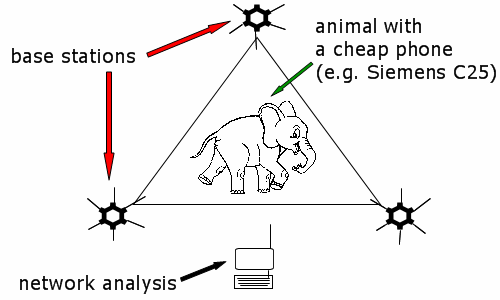
Coming back to the initial story: the triangulation method with it’s unique user IDs also reminds me of another AfriGadget-hack that’s prolly already out there – but if not, here’s my 2cent-idea: cheap mobile phones with stripped displays and small solar panels attached to the back cover that are then used as (cheaper) mobile tracking devices in nature preserves. Contrary to the old-fashioned Tx units, tracking equipment could be decentralized as it would rely on the base stations of the network (that, fortunately, often also cover nature parks) and consequently use less energy for a signal.

wilflife-triangulation

I sometimes wonder why I went into the water & sanitation business instead of focussing on my old interest from back in the days… :-)

p.s.: “we are based in the UK and the penetration of cell phones here is 108%, so we pretty much get everybody.” (source)

mobile blogging, part 3

It’s almost one year ago that I published three (1, 2, 3) articles on mobile blogging – and nothing has really changed since then.

Back in 2007, both the Nokia N95 and the Apple iPhone were released – two completely different phones that were only compared on numerous blogs due to setting new standards on each segment: the N95 being a true multimedia phone with a decent 5mp cam, 640×480 @ 30fps video (albeit a mono mic), a (slow) internal GPS module and a really nice multimedia player. With the latest firmware, it even plays flash videos (YouTube & Co.) and has different applications run at the same time (sort of multitasking). The iPhone on the other hand provided a compatible device that suits Apple users – a nice user interface and all-in-one device like the N95 which unfortunately still missed some basic phone tools (MMS, Bluetooth exchange, etc.). And although both phones aren’t the only cool devices out there, they sold quite well. Even if the iPhone doesnt feature all these special goodies the N95 comes with, Apple’s phone still has the best browser on a mobile phone.

screenshot0009

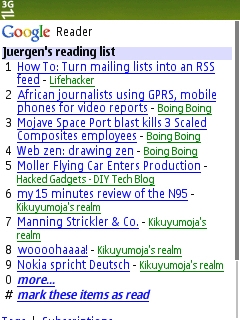
GoogleReader on my N95…

Back in 2007 I had bought the N95 because the music player on my Nokia 6230i had constantly failed (due to a bug in the firmware) and because I urgently wanted to have a new, sexy phone. Something that enables a better mobile blogging experience.

And that’s exactly the basic point here: until now, no mobile phone has actually delivered this *sweet mobile blogging* experience so far.

Back in 2007, I argued that it’s a software issue. And still believe it is. So instead of buying new phones, a systematic adjustment between the phone’s software (firmware & single programmes) and your blogging platform (WordPress, Vox, Typepad, etc.) comes into mind.

Sure, there’s this WP iPhone app some of us have tested some time ago, but still: it doesnt work that well, and it doesn’t provide a similar experience we’re having online on our laptop, surfing the net with decent browsers on bigger screens with full JavaScript support etc..

And this – I believe – is also one of the many reasons for the success of Twitter. Twitter just filled that gap on mobile blogging, phone manufacturers have failed on providing. Why? Because that special Twitter experience is the same whether you’re online via a browser window on your laptop, use it via an extra widget somewhere on the desktop, have it run as a stand-alone utility on S60 & iPhone platforms or just use SMS (for sending only, though).

You know I had a discussion with my Minister of Finance earlier this week on getting a new phone (again), and I had mentioned the new Nokia E71 and why it could be an improvement on what I am looking for (~ mobile blogging device). However, with the above mentioned discussion on mobile blogging being a software issue, I am rather confused now and think I should stick to my N95 at this point. Maybe wait for Google Android’s phone being released by the end of this year?

Another interesting developement since 2007 is the success of so-called Netbooks – which are lightweight laptops at 7″-10″ screen sizes, often equipped with an energy saving CPU, a solid state disk and enough flexibility to provide surfing the net, answering your e-mails and doing some other office work. Battery runtime still is an issue though, often only giving 2-3 hrs. Netbooks are currently sold for 300-400,- EUR in Europe and are small enough to fill that special gap the need for mobile blogging has created.

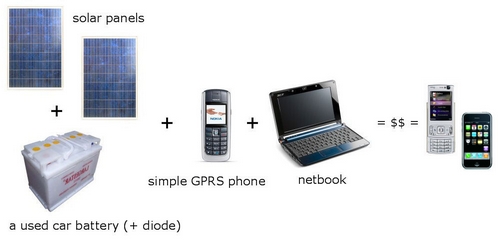
So here’s my conclusion: instead of waiting for the ultimate mobile web experience via a dedicated & maybe also expensive smart phone, I’ll bet on another setup: ppl – especially those in need in a rural Africa – will imho be introduced to the combination of basic GPRS & UMTS (3G) phones, hooked up to cheaper laptop computers such as netbooks.

Not today, not tomorrow – but maybe in two years time when basic netbooks wil sell for ~ 150,- EUR and will also be sold on the African continent in a big style. Why? Because a mobile phone is – although it is often shared with members of the extended family – still a device for a single user (despite of these new Nokias that come with multiple phonebooks). A computer though can easily be shared with others. Here’s what I had in mind:

Image1

Solar panels are already for sale in rural Kenya as well as simple GPRS-capable phones, netbooks could be equipped with a free & open OS (+ BT, serial port & USB cable driver package) and it would still cost below the amount you’d normally spend on a) getting a normal desktop pc online or b) a fancy smartphone that just still doesnt deliver the real web experience.

And the best part: this setup isn’t reduced to the needs of a rural environment, but also applies to urban areas in the US, Europe or Asia. In other words: if I had to do true mobile blogging right now, I’d go for this setup (ok, maybe without those solar panels).

Netbooks are what Twitter is used to be to SMS: added value.