
Die Welt im Notizbuch, Teil 1

Ich stehe im Gang des ICs von Mainz nach Frankfurt, lese endlich Ryszard Kapuscinskis Buch “Der Fußballkrieg” zu Ende – einem Buch, in dem er vor allem von Menschen, den Irrsinn der Kriege und seinen Erfahrungen bei Reisen auf dem afrikanischen und südamerikanischen Kontinent berichtet, und dabei immer wieder sein Interesse für die Menschen und deren persönlicher Schicksale deutlich wird (“ich hasse Schreibtische”) – und neben mir kommt es zu einem typischen Streitgespräch zwischen einem Fahrgast und dem Schaffner, weil der Bahnkartenautomat – als eigentlicher Übeltäter und Hüter des Systems – nicht auf Zugverspätungen eingeht, und in Folge dessen ein unpraktischeres, aber vor allem teureres Ticket ausgedruckt hatte. Streitwert: 8,- EUR, weshalb der Schaffner gebeten wurde, dieses auf dem Ticket zu vermerken (“..ich erwarte da mehr, ich bin immerhin Bahn-Komfort-Kunde..”).

Gestört durch dieses Hintergrundrauschen und der so unendlich typischen, unterschwelligen und angestauten Aggressivität beider Streitpartner, mische ich mich kurz ein um zu schlichten und darauf hinzuweisen, dass die Entwertung des Tickets durch den Schaffner schon hinlänglich genügend Beweis ist.

Es hilft alles nichts, der Kunde erwartet Service und Komfort, der Kunde hat – trotz mangelndem Rechtsverständnis – eh immer Recht, und nach ca. 20 Minuten Debatierens, trennen sich unsere Wege, und ich tauche wieder ab in meine Welt des R.Kapuscinskis – einer Welt, die mir so vertraut vorkommt und vielleicht gerade deswegen interessant erscheint.

Jung, dynamisch und ein kleines bißchen naiv schrieb ich im Jahre 1996 eine e-mail an Ostafrikas umsatzstärkste Tageszeitung, The Daily Nation, in der ich darauf hinwies, dass man in Kenia – im Gegensatz zu Deutschland – oft noch ein Lächeln für sein Gegenüber übrig habe. Dieser Hinweis wurde in der täglichen Gossipkolumne “The Cutting Edge” abgedruckt, die von vielen Lesern als erstes aufgeschlagen wird.

Letztens erzählte mir mein Kumpel T.H.User vom sechseinvierviernull-blog, dass er die Strecke FH FFM – Oberursel NUR noch mit vollgeladenem MP3 player absolvieren könne. “Der Akku ging zu Neige, und ich habe das Gerät dann extra ausgeschaltet, um auf der Rückfahrt noch meine Ruhe zu haben”, erzählte er mir – mit einem ermüdeten Blick in den Augen, wie ich ihn seit der alltäglichen Trips in der S-Bahn nach Eschborn gut nachvollziehen kann.

Meine Mutter rief mich im Zug an, und plötzlich strömten in Rödelheim zwei junge Kerle in den Waggon, die sich lautstark unterhielten. Meine Mum frug nach dem Grund für das laute Geräusch, in Folge dessen ich dann die beiden Spackos durch den Waggon zurechtwies, dass sie sich bitte ruhiger unterhalten sollen, weil es a) stört und b) ich telefonieren wolle. Aiii….“Aldaaa, machst Du Handy aus!”, kam als Antwort. “Machst Du Handy aus, machst Du Handy aus”.

Seit meiner letzten Bewährungsprobe in Kenia hat sich mein – für Aussenstehende fälschlicherweise oft als aufbrausend interpretiertes – Verhalten in solchen Situationen gelegt. Einzig der eine Tag in Nairobi, als sie unseren Wagen nach weniger als 2 Minuten blockiert und eigentlich nur nach einem Grund gesucht hatten, Geld zu kassieren, verbleibt mir als letzter emotionaler Moment in Erinnerung. Da war ich aber auch wirklich gereizt. Und die Kenianer mögen es ja überhaupt nicht, wenn man laut wird und sie damit mit einer Situation konfrontiert, die sie so in dieser Form nicht kennen.
Dies also als Erfahrungshintergrund, dazu die Müdigkeit vom Tag im Büro, veranlassten mich dann dazu, gar nix weiter zu unternehmen. Die anderen Bürohengste im Waggon waren eh damit beschäftigt, an ihrem MP3 player herumzuspielen, oder hatten auch einfach nur nicht den Arsch in der Hose, hier mal im Kollektiv der Jugend Respekt beizubringen. Ein Lächeln von mir als Antwort, und Ignorieren der nervenden Situation.
07-06-005
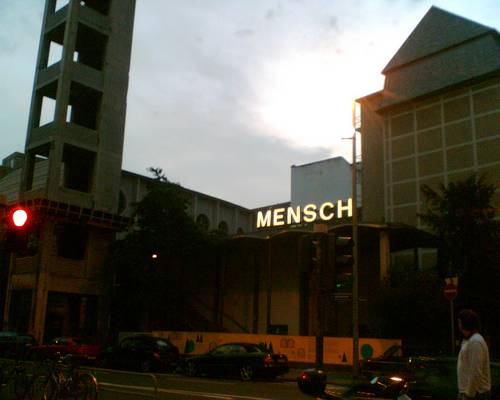
Der Mensch im Mittelpunkt? (Frankfurt am Main, Gutleutstraße)

Zurück zum enttäuschsten Bahnkunden und seinem Ticketproblem: so wie sie hier in diesem Land mit einer Sorgfalt, preussischem Pflichterfüllungswahn und Ernsthaftigkeit gute bis sehr gute Autos bauen, erwarten sie auch im Gegenzug ein nahezu perfektes Funtionieren der Systeme.
Kommt es jedoch anders, brodeln die Gemüter hoch und kanalisieren sich innerhalb dieses, durch die demokratische Grundordnung (LOL) eingefassten Rahmens, auf solche banalen Vorgänge wie Ticketverbuchungen und andere was-wäre-wenn-Situationen, die – für Ausstehende betrachtet – in ihrer Wichtigkeit weniger wichtig erscheinen.

Und es ist ja nicht so, dass es in Kenia nicht auch zu verrückten, zwischenmenschlichen Situationen kommt (was dieses traurige und schlimme Beispiel vielleicht verdeutlicht), aber dort habe ich in keinem einzigen Sammeltaxi (“matatu”) erlebt, dass sich Leute so dermaßen aufregen können. Und wenn dann ist dies ein schneller Prozess, bei dem dann alle Fahrgäste – z.B. bei einer spontanen, willkürlich übertriebenen Erhöhung des Fahrpreises aufgrund von außergewöhnlichen Einflüssen wie Regen – im Kollektiv den Fahrer und seinen geldeintreibenden Begleiter zügeln und auf den Boden der Tatsachen zurückbringen. Im Zweifelsfall wird dann einfach das Gefährt gewechselt. Vielleicht auch weil dies das System ist, welches solche Vorgänge regelt (und nicht etwa die Regierung).

Ich wünsche mir für ein Deutschland im 21. Jahrhundert, welches innerhalb von Europa nicht nur als Transitland dient, noch viel mehr Leichtigkeit, ein entspanntes Verhältnis im täglichen Umgang und Miteinander, ein wirkliches Interesse und Offenheit gegenüber anderen Kulturen und Rituale, mehr unsynchronisierte Filme im Fernsehen & den Kinos, sowie ein gesundes Demokratieverständnis, welches fernab geschichtlicher Altlasten und typischer Systemzwänge der Kreativität in allen Bereichen mehr Aufmerksamkeit schenkt.

Manchmal beneide ich solche Korrespondenten wie R.Kapuscinski oder P.Scholl-Latour, die parallel zur positiven Entwicklung ihrer Heimatländern, im Dschungel Afrikas oder Südostasiens, “von Mücken gejagt und Durchfall geplagt”, ein Porträt aus einer anderen Welt aufzeigen wollten. Und diese “andere Welt”, die Erkenntnis, dass es oft auch anders (zu)geht, genau das wünsche ich mir hierzulande manchmal.

Vor allem beim Bahnfahren.
why Web2.0 is important to me

[Disclaimer: I am currently reading David Weinberger’s latest book “Everything is Miscellaneous”, which seems to be just as exciting as “The Cluetrain Manifesto” from 1999 (which I back then forwarded to my boss @ work) or my prof‘s “Cradle to Cradle” bible – books that inspired me and have a long-lasting effect…]

The organization I am currently working for (as an intern) has a relatively huge repository of technical datasheets with lots of interesting articles and archived knowledge. Most of these datasheets are saved as PDFs and published online, searchable through a site-internal search interface and only identifiable through their title. Obviously, a smart headline leads to proper search results.

The other system they are maintaining is a document management system (DMS) which is a nice step forward into the right direction. Only, what it lacks is a quality search.

Most of you have already started to appreciate the advantages of social bookmarking – where humans work as filters and often only save interesting pages, thus raising the quality of any obtained information. I prefer del.icio.us to most Google search results, unless I am e.g. looking for an image where I need to have the wider choice of search results.

Now with this above mentioned organization in mind that has in the past tried to backup its digital data into a file repository, what seems to be lacking is a tagging-mashup. Something like an add-on for the DMS (=> yeah, there goes the API question) that consists of another database which only stores a) quality keywords and b) the links to each document. So instead of doing an ordinary search on the DMS, which will return Google-alike search results (displaying all results on a certain keyword), the add-on would only deliver those results that have been declared as “quality content” by its users.

So you see, the basic idea behind this blog post was that while I know a lot of ppl are already fed up with Web2.0 terminologies and the hype around it, others have only just started to realize what this is actually all about. And while some private individuals are already power users of Flickr, Technorati & Delicious tagging-worlds, most companies still need to start realizing this huge potential. Just as many of them have never even heard of the Cluetrain Manifesto… *sigh*

(this is SUCH a huge market?!?!…)

Wie komme ich an ein Nokia N95?

Motiviert durch meinen Vertragswechsel letztens von Vodafone zu Blau.de, und sicherlich auch durch den momentan berechtigten Hype ums iPhone habe ich gestern abend kurz bei eBay reingeschaut: auf der Suche nach einer guten Finanzierungsalternative fürs gewünschte Nokia N95.

Die Vorgeschichte
Bisher bin ich natürlich ein Handyvertragsmensch gewesen, d.h., alle zwei Jahre ergab sich die Möglichkeit, ein Handy zu Vertragsverlängerung finanziert zu bekommen. So entschied ich mich letztes Jahr für das eher schon ältere Nokia 6230i, welches im Gegensatz zum erst kurz getesteten 6233 über eine entscheidende Unterfunktion im Kurzmitteilungsmenü verfügte: die Auswahl einer Kurzmitteilungszentrale (SMC) direkt vorm Versenden einer SMS – was für die Fortführung meines alten Vertrages mit DM-Preisen bzw den Versand vergünstigter netzinterner SMS von elementarer Bedeutung war. Nach dem Anbieterwechsel fiel dieses Kriterium jedoch komplett vom Tisch, so dass ich endlich ganz unabhängig vom Vertrag & anderen Einschränkungen in Zukunft jedes beliebige Handy verwenden kann.

Was will ich?
Gewohnt durch den Komfort des Abrufens meiner e-mails via GPRS bzw. direkt vom Handy aus in Kenia (!), zahle ich bei Blau jetzt fast genauso wenig wie bei Safaricom für das Megabyte an Daten via GPRS. Durch die Möglichkeit, jetzt auch noch UMTS als prepaid Kunde nutzen zu können, erscheint diese Technologie bei den relativ geringen Kosten natürlich in einem viel besseren Licht.
GPRS, EDGE und UMTS, sowie – natürlich – WLAN und Bluetooth möchte ich auf jeden Fall in einem neuen Gerät haben. WLAN alleine schon deswegen weil ich dadurch eine Menge Kohle sparen und zB zu Hause via FritzBox telefonieren kann.
Dazu eine vernünftige Kamera mit Autofokus und mind 3,2 MPx, einem Blitz/guter LED zur Beleuchtung bei Dunkelheit und einen vernünftigen MP3 Player. Mit vernünftig bezeichne ich jene Player, die nicht bei jedem Neustart des Handys die MP3 Sammlung komplett einlesen und daraus einen Index erstellen wollen und dann auch noch irgendwann im Betrieb abstürzen – so wie es leider bei meinem 6230i in Verbindung mit der 2GB Speicherkarte der Fall ist.
Einzig die fehlende QWERTY/Z Tastatur macht mich ein bißchen stutzig, denn einer der Gründe wieso ich unbedingt so ein besonderes Telefon haben möchte wenn man doch meist eigentlich nur telefoniert und Kurzmitteilungen verschickt, ist natürlich die Möglichkeit, unterwegs Texte ausformulieren zu können. Das mache ich nämlich am liebsten unterwegs – texten :-)
Das Nokia E61, so nen BlackberryClone mit Tastatur, wäre so ne Alternative zum Nokia N95, allerdings ohne Blitz/LED, dafür für ca. die Hälfte des Preises zu bekommen. Hmm.

Was zahle ich?
Bestandskunden werden in Dland irgendwie schlechter behandelt als Neukunden – insofern erscheinen die meisten Neuverträge günstiger zu sein, als wenn man jetzt seinen Vertrag verlängert. Da ich ja jetzt eh prepaid Kunde bin, muss ich mir das Handy vollkommen selber beschaffen. Nur wie?

Wie finanzieren diese Typen es, ständig ein neues Handy mit sich rumzuschleppen? Neukauf, 2monatige Benutzung und dann wieder verkaufen? Bisher fallen mir nur folgende Optionen ein:

A) Im Versandhandel neu bestellen, lt. Preisvergleichsdienst schon für ca. 590,- EUR zu bekommen. => zu teuer!

B) Gebraucht kaufen, zB bei Ebay. Kostet aber im Grunde meist fast genauso viel wie wenn man es neu kauft. => zu teuer!

C) Einen Neuvertrag abschließen bei einem der vier Anbieter und mindestens ca. 250,- EUR dazu zahlen, sowie mindestens 9,95 EUR monatlich. => zu teuer!

D) Zwei Neuverträge abschließen und monatlich ca. 20,- EUR an Grundgebühr bzw. Mindestumsatz bezahlen. Für Studenten sogar schon ab 7,96 EUR/Monat/Vertrag.
Hmm. Macht das Sinn? 24 Monate x 20,- EUR = 480,- EUR. Wäre immerhin günstiger als Lösung a) & b).

E) …. ?

Fazit
Momentan erscheint mir nur der Abschluss von zwei Verträgen ? je 9,95 als kostengünstige Lösung attraktiv. Hmm…

AOB:

> Hallo liebes Blau Team,
>
> wieviele Rufnummern kann ich auf den neuen UMTSfähigen SIM Karten
> speichern? Handelt es sich dabei auch wieder nur um 16k Karten, auf
> denen man nur 100 Rufnummern speichern kann?
>
> Vielen Dank!

…

Auf der SIM Karte können Sie bis zu 10 Rufnummern speichern.
Weitere Daten können auf dem Handy gespeichert werden.

Viel Spaß beim Sparen

Wer spart hier?

visual tagging

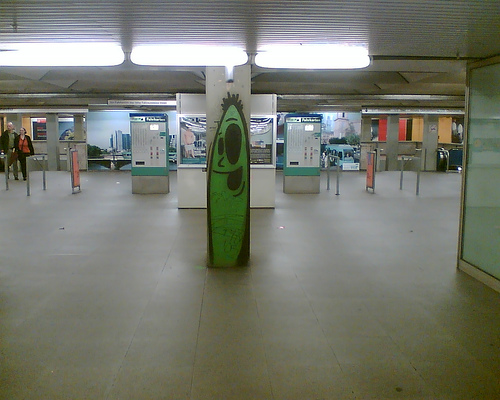
I recently uploaded this pic on my flickr account:?

streetart ffm

Streetart, a normal graffiti in a metro station in downtown Frankfurt. Nothing special.

Upon seeing this same figure somewhere else in Frankfurt, I realized once again that this graffiti also perfectly illustrates what maybe someone like David Weinberger tried to explain in his recent book “Everything is Miscellaneous” (see TBG Ethan’s post on this):

Suppose I would like to know more, find out the name of the artist who made this graffiti, know more about the origin of this figure, get some insight into the not-so-obvious context it comes with. Maybe this graffiti is part of some streetart project, something similar to Banksy‘s famous projects? Well, is it?

Unless of course I blog on it or upload it to a photo community like Flickr, adding tags and give it some reference/context, this pic and the information given on it is just a bunch of binary data. But how do you tag this pic if you don’t know anything about it?

What about an image search? Something like Google’s image search doesn’t work this way. You will always need to type in words that describe this picture. Keywords, further information, something that makes this identifiable among the huge repository of other pictures.

Next thing I’ll have to add to this blog is the tagging of my articles? (yeah, I know…), even tried doing so some time ago but then forgot about it as other things came up that seemed to be more important. However, tagging makes sense. Most of the targeted informations I am obtaining through the internet these days are found by using tags. Social bookmarking websites are the best thing introduced on the net since the introduction of instant messenger services during the late 1990s.

Coming back to the tagging of visual informations: given the fact that most of my friends have an eye memory where they remember things visually, I am wondering if there are any services / algorithms so far that help to make use of this visual approach instead of using words/tags only (?).

anglo- & francosphere?

We’ve been talking about this some time ago over at Hash’ website: the unknown? potential that gets lost while ppl are busy developing (double) content for something I would like to describe as the anglosphere and the francosphere.? Two worlds that co-exist and? ? generate their own dynamics.

Is it so?

And if so, will there be any attempts within the blogosphere (at least) to unite these two worlds separated by language barriers?

I don’t know how they solve it in West Africa (comments plz), but when I look at Europe alone at this given moment – Germany, France, England – although neighbouring countries and empires for ages, the language barrier still exists. Especially when it comes to the folks on the ground – bloggers, for instance. How many bloggers in Germany or the UK actually read french blogs? Yes?

And given my assumptions are true, what do you – dear readers – think? Should there be any umoja-styled website for “all Africans”? Not because of any false & ancient? “Africa is a nice country”-perspective, but because of the missing potential that gets lost whenever smart brains contribute similar content in their own languages.

professionaaaal titooools

So I caught myself updating my profiles on xing.com and linkedin.com (isn’t that enough already? facebook, twitter & co for private stuff, xing & linkedin for the pro section?) and realized that I actually can’t think of any professional title, something like an instant keyword that describes my job.

Well, which job? My rummaging here, here, here, here and here?

And what do I put there?

a) what I learned? (~industrial manager, oil business)

b) what I studied? (~ environmental & civil engineering, with an emphasis on sustainable waste (water) management & eco-efficient product design)

c) what I’ve been employed for in the past? (~ list too long)

d) what I actually did ? (~ office “best boy”)

e) what I consider myself? (~ imagineering dude)

f) my current job description? (~ intern)

g) what I am currently doing? (~ editing technical datasheets & setting up a CMS)

h) ……?

As for those social network platforms online, I’ve started? mentioning my own (imaginary) company called Kikuyumoja Inc.. Job description: “optimizing idle time”. The dude abides…

AOB: thx GoogleAdSense for adsensing my blog with “composting toilets” and “biological dry toilets”!

DRC

The beauty of running a private blog is that I can actually cover various topics, without being forced to please anyone with a certain quality of content. As time goes by and rants pass through the fingers, different stories have been told so far and it was on the commuter train this evening at 8 pm when I realized my blog is 2 years old.

I started blogging in June 2005 because of a) Mzeecedric, who encouraged me to do so, b) i had an idle website and c) another community website refused to publish a story of mine (much unlike the Kenya Times :-), so I opted to publish my stuff on my own website. And although I sometimes feel the urge to write in my mothertongue, most of my entries have been in English so far.

That’s 2 years of this still burning desire inside to share a lot of small and a few huge things with the world out there. Sharing, and also a desire to write about people, describing situations, often, not always, trying to portray a glimpse at another world. A subjective view, my thoughts on a few things of interest.

My favourite entries of course are these DoItYourself (DIY) projects like the water filter and/or the hinge issue with Irene’s notebook – both entries I am still getting lots of hits for on a daily basis.

Interestingly, the water filter issue – as I sometime later on realized that there’s another NGO in Kenya actually promoting the filter system I built – served as another hint for me to formulate an idea I’ve since then been working on. Have you ever wondered about the work of some NGOs, active in the sector of environmental protection, that just reaches a few selected groups? Capacity building, as they so often call it, still is an interesting subject.

But I digress.

I think it’s the silence of these warm summer nights, paired with the reflective mood on the train tonight that made me pull out my (paper!) notebook and put down a few lines I wished to directly type into a still non-existing PDA instead. And it may also be influenced by the book I am currently reading:

Michela Wrong’s “In the footsteps of Mr Kurtz” – a book I’ve bought in July 2001 and had left in the shelve since then, waiting for the perfect reading moment to arrive.

06-11d017
“New Zaire Inn” in Garissa, Kenya, later on renamed to D.R.C….

While Michela has a disputatious way of reporting her stories and apparently isn’t always welcomed by her hosts, I like this particular book. She actually describes the scenery in old Zaire pretty vivid, and what I – of course – love is that special part about les sapeurs – these men who dress in expensive fashion clothes and aim to be different any given moment.

The Congo.

As a blogger, I of course associate this with “007 in Africa” and am reminded of those hectic days in 1996/97 when a completely confused former president Mobutu, who had for long already lost any reality for his role as president of a nation that has always been in the waiting line, flew into exile. Ahhh. Memories.

That’s 10 years ago! It feels like yesterday.

Waiting 6 years before eventually reading Michela’s “brilliant account of Africa’s most extraordinary dictator” (the Economist) wasn’t such a bad idea afer all. The distance provides the needed room which is required to enjoy movies like this one.