Forodha

We went to Forodha Towers today and got our Kenyan Driving Licences renewed. Charges are Kshs. 500 /= for an annual renewal and 1250 /= for a triennial.
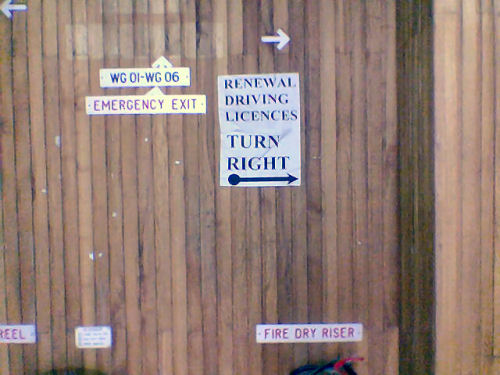
foro4.JPG
inside Forodha Towers…
foro5.JPG
the counters
foro3.JPG
a neat way to conceal non-working lifts, isn’t it?
Keeping in mind that we were there on Friday afternoon at 4 pm and remembering the times back in the days when such services were only offered at Nyayo House, the whole process was extremely fast and well organized.
I was told that a lot of offices are still vacant at Forodha Towers as a lot of institutions were transferred to (the overcrowded) Times Tower and are now slowly moved back to the old premises.On our way out, we came across the following view(s)
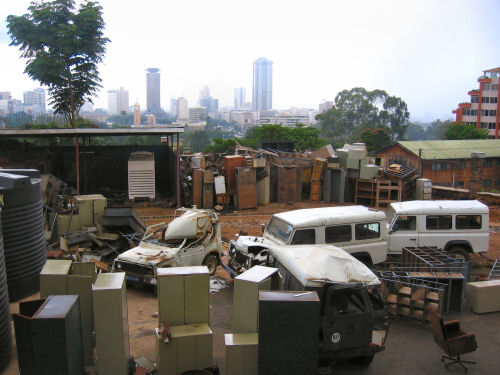
foro12.JPG
foro22.JPG

By the way…it takes more than 2 years (without KK) to get a certificate for tax exemption for an NGO (~ a charitable trust) from the Treasury. For each application!

AOB:

moiplants.jpg
the soil for (new) trees on Moi Avenue?
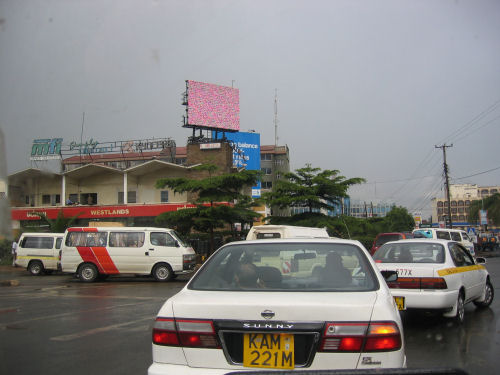
screen1.jpg

screen2.jpg
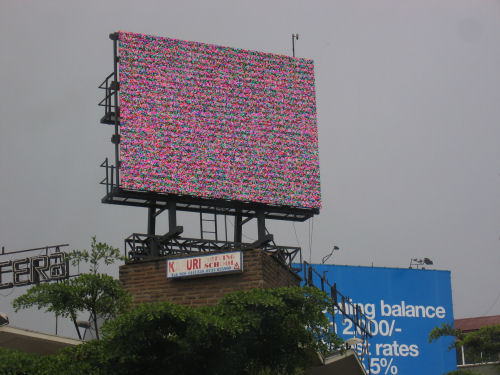
Apparently, this is what happens when huge multimedia screens (at Westlands old-Uchumi roundabout) have a date with the rain….

Nairobi, it seems, has become the city with the most billboards, advertisments and “buy two get one free”-styled promotions. No wonder people here tend to be so capitalistic these days…
=> I’d like to blog more often from here, but internet access is such a pain although I’m privileged enough to be using the DSL connection @ AEM (thx, Harry & Lelle!) which is just great! I guess I’ll need to get my hands on my own notebook soon (where i’ll be able to install my own email client) + urgently need to rethink my blogging strategy (~offline blogeditor or blogging via email).
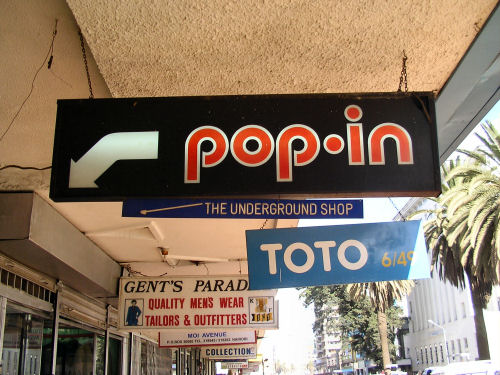
Pop-In

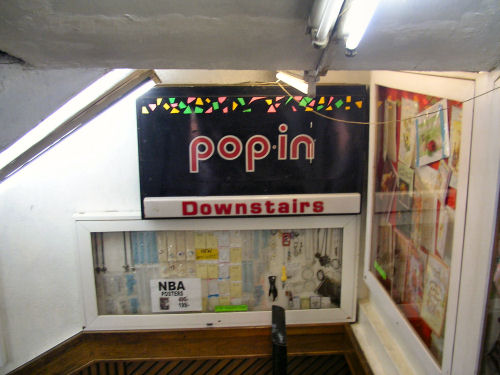
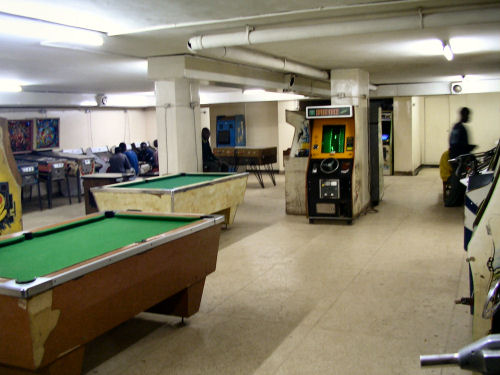
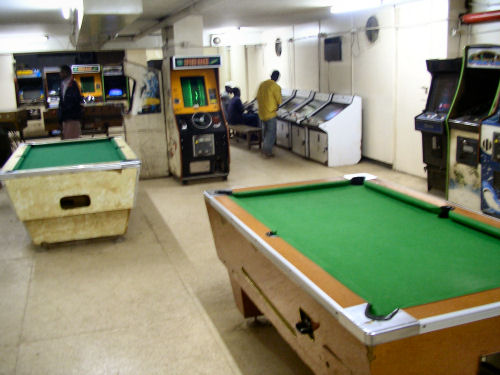
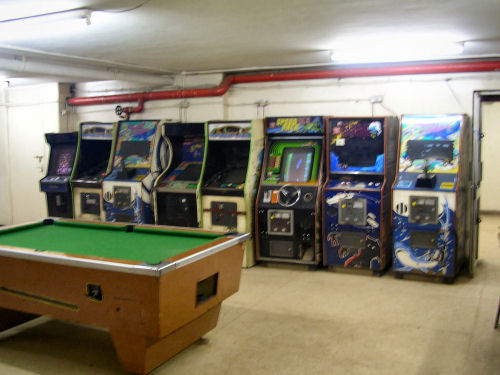
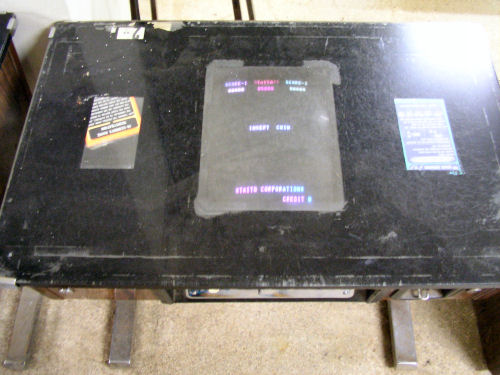
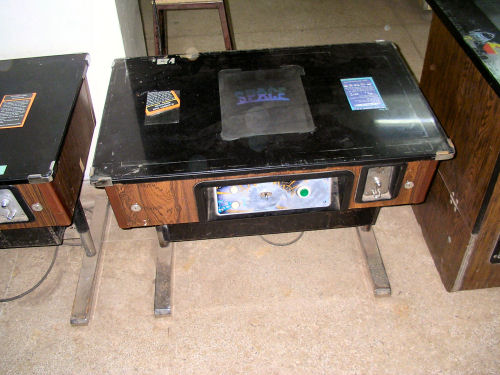
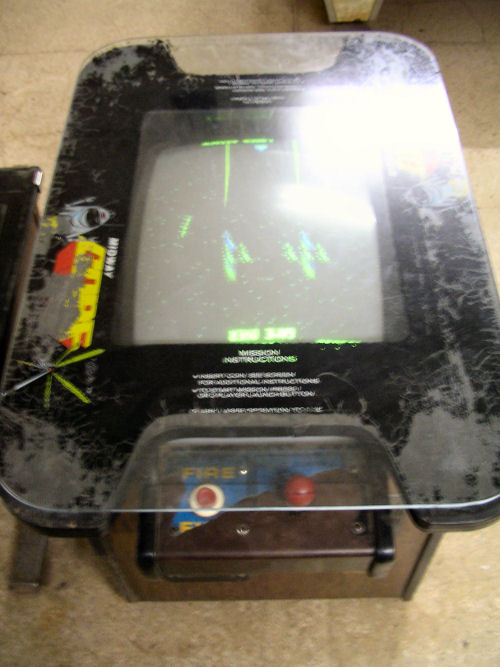
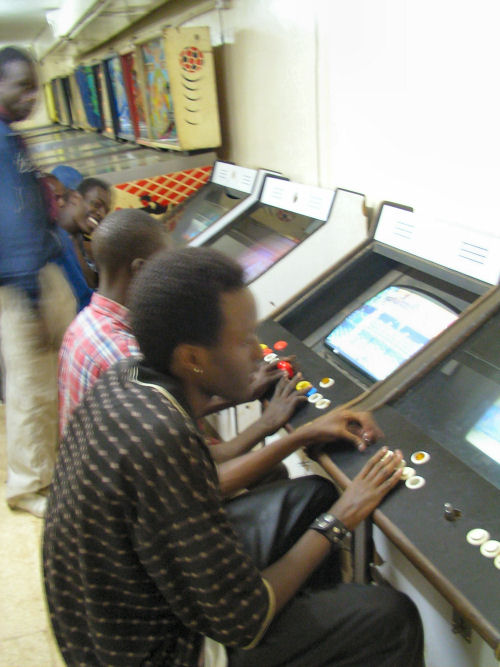
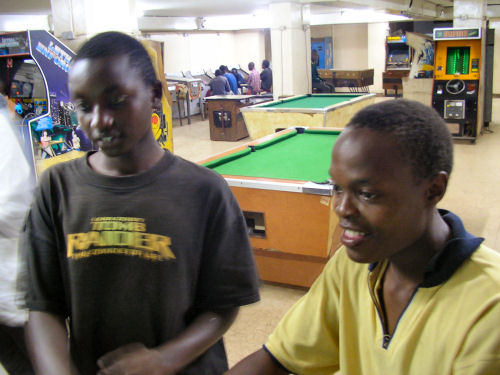
After entering Pop-In on Moi Avenue, Nairobi (Kenya), and asking the owner for kind permission to take pictures (“I like this place, the machines are sooo unique”….”ok, basi…”), I instantly realized why you, dear Steve, started doing “something with computers”. Thanks for that great tip to pay them a visit!

I consider this and other “amusement arcades” the incubator for our never-ending interest in anything IT….? :-)

Pop-In is one of those institutions that actually requires huge funding to buy, repair and preserve all these old machines that introduced us to the world of 1010010100101 & Co from their death somewhere in dusty downtown Nairobi…
popin1.JPG< />

popin2.JPGpopin3.JPG

popin4.JPG

popin5.JPG

popin6.JPG

popin7.JPG

popin8.JPG

popin9.JPG

popin10.JPG

popin12.JPG
the corner with “spare parts”.
popin15.JPG

Please excuse the blurry picture quality – I shot these pics without a flash and was so excited that I forgot about everything else! I’ll try to upload them on flickr in a higher resolution when I’m back on my (own!) computer…

kibaazi

This might be of interest to you, Irena:

icraf1.jpg

icraf2b.jpg

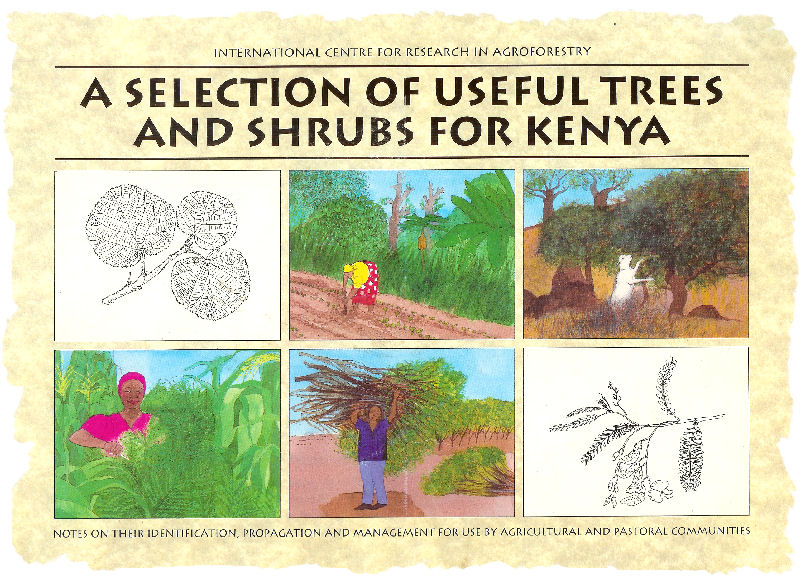
“A selection of useful trees and shrubs for Kenya / Notes on their identification, propagation and managament for use by agricultural and pastoral communities”, International Centre for Research in Agroforestry (ICRAF), Nairobi, 1992;
ISBN 92 9059 096 3

=> sabuni…. (~ think of FightClub :-D)

the marketing pool

While googling for the keyword “Eldoret” (a fast inet connection and random keywords make up for perfect time-wasters which of course are always prefered to work which would actually put some food on the table..), I once again realized how many different ngo projects are done in Kenya.

I am SURE many of you can instantly name a few initiatives and NGOs that are dealing with water, energy, health, general environmental issues, IT, social work, etc etc and there sure are many we have never even heard of.
On the other hand, there are many qualified, jobless young Kenyans dying to get a decent job if only they knew where to apply.

To make it short: is there any website or office in Kenya that tries to a) lobby the NGO’s work and b) tries to get all NGOs to round table talks (as a problem seems to be that many NGOs differ in political orientations, funding and other strange variables).

As a start, I am thinking of using a free Wiki software to at least document all NGOs willing to publish their work on a single website. The idea of such an informative website is to get an overview of what has been implemented so far, what kind of policy the GoK has on certain matters, the people’s view and the typical approach strategy NGOs use to get their messages conveyed.
A website that sums up ALL different opinions and gives the public an overview (at least) of how they can be involved. You know, there are active forums like Mashada & Co, or even the vivid kenyan blogosphere, where ppl communicate on a daily basis. Why shouldn’t this be possible on a matter of national interest?

Natujenge taifa letu
Ee ndio wajibu wetu
Kenya istahili heshima
Tuungane mikono pamoja kazini
Kila siku tuwe nashukrani.

Only words?

I found this website that tries to do cover the above mentioned idea – however, did YOU know it?

ecomoney?

“There is no doubt that the market has spoken in a big way.
This leaves no doubt in the capacity of our economy to finance well-structured viable ventures”

Esther Koimett, Investment Secretary, as quoted in today’s DN on KenGen’s IPO.
I am not such an expert on private investment like Bankelele and his commentators, who are btw doing a great job in reporting stories from the monetary world in Kenya. What triggered my attention on the KenGen IPO, though, was that Kenyans apparently come out in great masses when it comes to investing money in (hopefully) profitable markets.

I was also going through an interesting advertisment (published in April 11th edition of the DN) on the launch of the Kisumu Water and Sanitation Project which is partly funded by the French Government through AFD – an investment to the tune of 20 million Euro.
Now, bearing in mind that people are willing to spend their savings on shares – an investment that promises a healthy divident in future, what if we take this kind of investment spirit onto different levels? So far, it seems, ppl are willing to invest their money into anything profitable – so why does the Governemnt have to look for funding if Kenyans actually do have the money needed to …repair Kisumu’s water supply and sanitation services?
All four speeches on the launch of the above mentioned project agreement held by the Minister of Water and Irrigation, his P.S., the chairman of Kisumu Water and Sewerage Company Ltd. and the Mayor of Kisumu contained a phrase in which they encouraged all involved parties to “embrace good corporate governance” or even a straight-forward challenge to the Water Services Board & – Provider “to live up to the expectations”. And, according to the P.S., “the support has attracted the Global Partnership on Output Based Aid (GPOBA) funding which if used properly should solve the problem of water and sanitation in low income areas”.
It is great to see this kind of progress since the implementation of the Water Act 2000, and a Ministry that is actively encouraging the people to greater achievements.

And as much as these new funding approaches (like GPOBA, Infraco or Guarantco) are interesting, what I would like to ask instead is: Are ppl ready to accept a completely different approach on the way we see water and sanitary needs under a financial context? What (for instance) if we can find ways to succesfully implement even more EcoSan projects in Kenya where human excreta and waste water become nutrients that could then be sold for agricultural use (~fertilizers)?

Or in other words: our waste => money.

The technology is already available, the understading for closing environmental loops is currently being thaught to future generations and the monetary incentive is given. So, what do you think? Would it be possible to attract ppl in investing their money into such unorthodox businesses that do not only fill the pocket but also help closing some much needed environmental loops?

Lifestyle, the Nakumatt way

Dear Diary,

today I’ve come across a nice bedroom set from Kenya’s leading discounter Nakumatt:

nakumatt.jpg

While I can well imagine a lot of customers falling for this kind of interior design for the simple lack of an own taste (or mabye because the’ve seen this kind of style in USamerican TV shows), there’s only one thing I can think of when I look at it: KITSCH.

Are Aren’t there any Kenyan carpenters? who could produce such furnitures as well?

House of Porridge

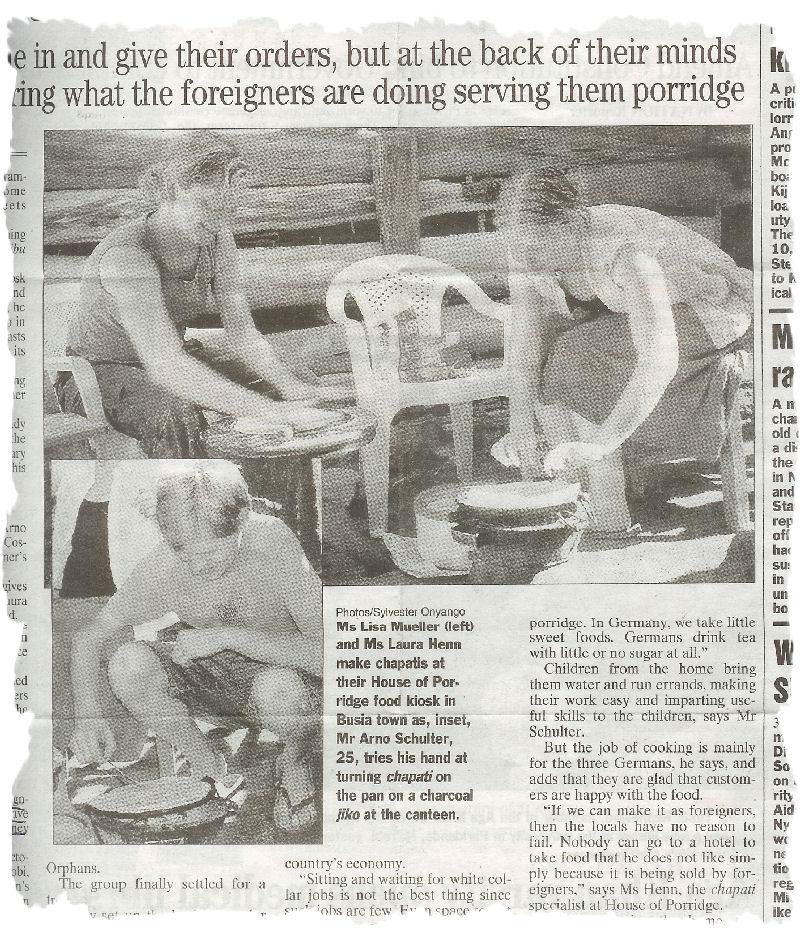
My local correspondent Mbuzimoja today forwarded this hilarious story from the Daily Nation (page 17, April 6, 2006) to me, a story about a group of Wazungu (…) from Germany who opened up a food kiosk in BUSIA TOWN (!) “that boasts tea, chapati, potatoes and porridge on its menu”. They call it “House of Porridge”:

foodzungus.jpg

Customers “can only conclude that the foreigners are stranded in Kenya and have opted for the business to raise money for their tickets back home” …. “most people thought the food kiosk was not a business fit for the foreigners, after all they had enough money to start a big venture. Ability is wealth?

Ms Lisa Mueller, Ms Laura Henn and Mr Arno Schulter – all in her mid-twenties – came to Kenya in October 2005 to work as volunteers. The food kiosk, the article says, serves as an income generating project. A neat idea, I think. Why not?

The story reminds me of a Kenyan Lady by the name of Rachel Kamau who runs a nice & comfy Kenyan restaurant in Freiburg, Germany (I’ve mentioned earlier last year).
“If we can make it as foreigners, then the locals have no reason to fail. Nobody can go to a hotel to take food that he does not like simply because it is being sold by foreigners”, Ms Henn is quoted in the article.
Well well well….some ppl have the freedom to choose while others just need to survive the next day. On the other hand, though, my reason for blogging this amusing story is that it highlights the difference in thinking. Whereas these Gaamaaaans just came to Kenya to help and work (and I think I’m not much different from that, at least they are showing this business approach), the typical Kenyan reaction in the first place is “ati, can’t they afford to go home?”.

Sometimes I am so sick of this stereotyped thinking. As much as I never questioned the opening of that Kenyan restaurant in Germany, I sometimes wonder when these “mzungu, mzungu…give me shillingi…” cries will stop whenever a white person enters a black village. Harassment, from the other perspective. Similar to that, it’s like me joining the Kenyan Blogosphere and then ppl approach me and comment like “oh, I didn’t know you are white”. Well, SORRY that God has given me this skin colour?!
I mean, what I am supposed to answer on such comments? Dito Kenyans of Indian Origin – when will we start accepting each other without looking at ancestry or tribal origin? Me, me I am just JKE :-)