kumi na moja

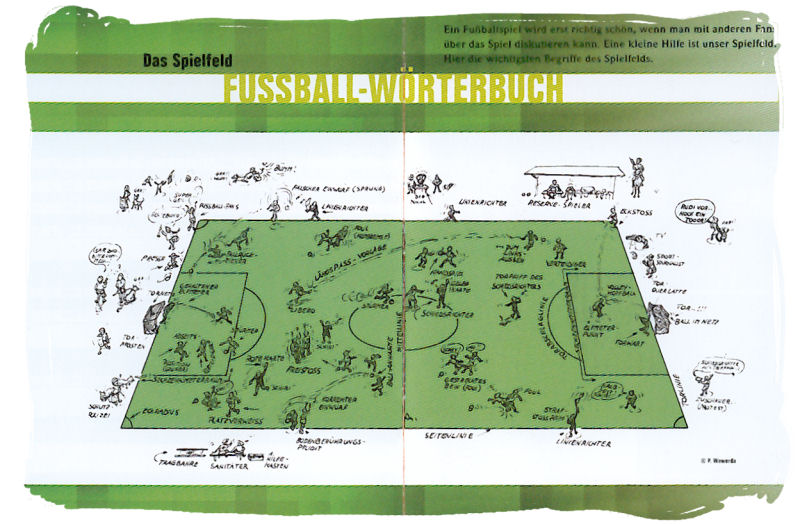
The German Cultural Centre, also known as the Goethe-Institute, recently published a small flyer aptly named “Am Ball mit Goethe” to promote the upcoming World Cup.

The GI, whose job is to promote German as a foreign language and the German Culture abroad (in Kenya @ Maendeleo (ya Wanawake) House, next to the French Cultural Centre), put a small list of useful words from the soccer world in this small 22-paged booklet with translations between German, English, French, Spanish and Portuguese.

And they also included this hilarious visual dictionary (in German only) to succesfully distinguish the referee from the linesman as well as identifying who’s who on the field.

fussball1.jpg

Mimi, me I am not the football fan, however, I am very curious to see how Germany will play its role as host to the World Cup and what kind of performance it will deliver hospitality-wise…

Football is freedom. (Bob Marley)

AOB: My congratulations to all the winners of the Kenyan Blog Awards! :-)
Click here for an overview of the winners and please make sure to check out their blogs. The Blog Awards on the Kenyan Blog Webring (KBW) are an elegant incentive to promote the Kenyan blogoshpere online and they also set some sort of standards.Who knows, maybe we’ll soon see more and more Kenyan blogs online and joining KBW?!

New African

Fellow ex-blogger Irena recently forwarded a paper copy of the NEW AFRICAN April ’06 edition to me (thx!!) and while going through their articles, it somehow surprised me that a magazine of such broadness (the last time I bought this zine was in February 2000) still seems to battle, to justify the self-worth of the African continent and their people in the 21st century. A battle for anknowledgement?

That is, the lasting impression is that they are constantly trying to portray this modern picture of the continent – the focus, it seems, is on showing the rest of the world what’s so new on Africa and how diverse it actually is.
Please don’t get me wrong – I like this approach, and I also like to read positive news and being informed on different background stories. The magazine itself is very interesting, and I take it that compiling such a magazine every month isn’t an easy task as its readers world-wide sure are some of the most critical.
On the other hand, though, I am of course tempted to compare this sort of journalism with the local, monthly media – if possible. And this leads me to the assumption that our local (european) journalism is much more foccused on reporting contemporary stories and thus focusses on the story itself – whereas the New African editors try to catch the bigger picture, often trying to combine the present with the past. It’s like introducing readers to a new world, trying to get their understanding for the various microcosms by adding the historical context. It’s like reading le monde diplomatique in the format of TIME magazine.
The reason I am mentioning all this is because I did not intend to write a review on the New African, but instead, I was wondering about the impact this kind of journalism / publishing / writing style has, and the message that tries to be conveyed with such approaches.
Or in other words: the African continent with it’s relatively young countries shaped by the colonial heritage, which still has more relevance to today’s politics compared to the also known history and cultural values found on the continent long before any white (wo)man set a foot on it, has something unique, something very important I think: a burning desire to advance and an undying thirst for knowledge.
Let’s take Germany, for instance, and the various debates going on in this democracy on a national level. Any bugging issues? Think of falling birthrates (resulting in unhealthy pension sheme), the european and global competition next door (= unemployment & frustration) or just excessive taxes. While politicians & others are debating the problem and trying to find possible solutions, only a few people really go back to this point where they ask the fundamental question of how we – as a society – want to live in future and what kind of target we are heading to.

And this is exactly where I would like to make the connection to this New African magazine: what we need over here in Europe is another type of journalism, something that just not reports facts, but instead shows us how all these little problems, microsms and societies mix up and deliver the bigger picture. There are (of course) a few such new styled magazines (~Brandeins) that try to catch the atmosphere, but I would like to see this kind of spirit swap over from the paper form into the heads of my people. Something that gives them an understanding for the global context and how new developments are to be seen with respect for the past.

The New African does exactly that in its April edition by publishing excerpts of Ayi Kwei Armah‘s new boook titled “The Eloquence of the Scribes”. Taking us back into history to get an understanding for where we are heading to in future – conscious and unconscious.

the acceptance

Last evening, I saw a documentary on tv that portrayed Germans whose fathers had been British soldiers stationed in Germany right after the end of WWII. One of these ex-soldiers – now living in a nursing home in Canada – has children from romances all over the world who regularly visit him. “Being loved by all my children and knowing that they take care of me”, he said, “is what’s worth living for”. True.

Now, I don’t have children yet – and I hope there aren’t too many women out there whose hearts I’ve broken in the past.
What I do have, though, are really good friends – people from different corners of the world who have a very big heart and whose friendship and love I really appreciate.

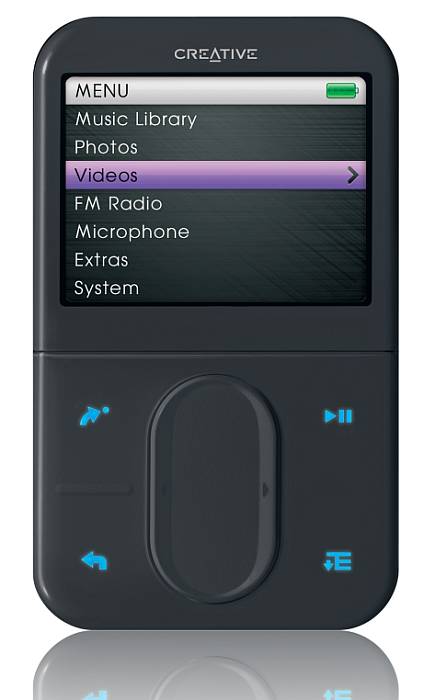
One of those close friends decided to order a CREATIVE ZEN VISION:M from Amazon and have it send to me. JUST LIKE THAT! It isn’t my Bday or anything like that. Ok, maybe because of Easter, but the point is: the person told me: “You might want this for use on your journeys…”. Hola!

vision02.jpg

This Creative Zen Vision:M is a mobile audio/video player (like an Ipod Video) with 30 GB of hard disk space and battery runtime of up to 11hrs. It plays audio files such as mp3s, videos such as AVIs, shows photos, has a built-in FM radio, a microphone and extras like a calendar or a contact & tasks manager for synchronization with my computer. And the best part: it connects to the computer like an external harddrive, so I won’t have to search for another external hdd solution.

Apart from the fact that the person who has given this to me isn’t too rich to give “just like that”, I am having problems accepting this as a present. It is so nice and such a joy to give to others – but it is very hard to accept such blessings in the same way. While I am very grateful for the honour given me through this gift, I think the easiest way to accept it is by sharing it. So, my dear friend – i know you’re reading this – thengiu muno for this lovely joy and rest assured: I’ll use it now and give it to you later on this year. Sawa? :-)

House of Porridge

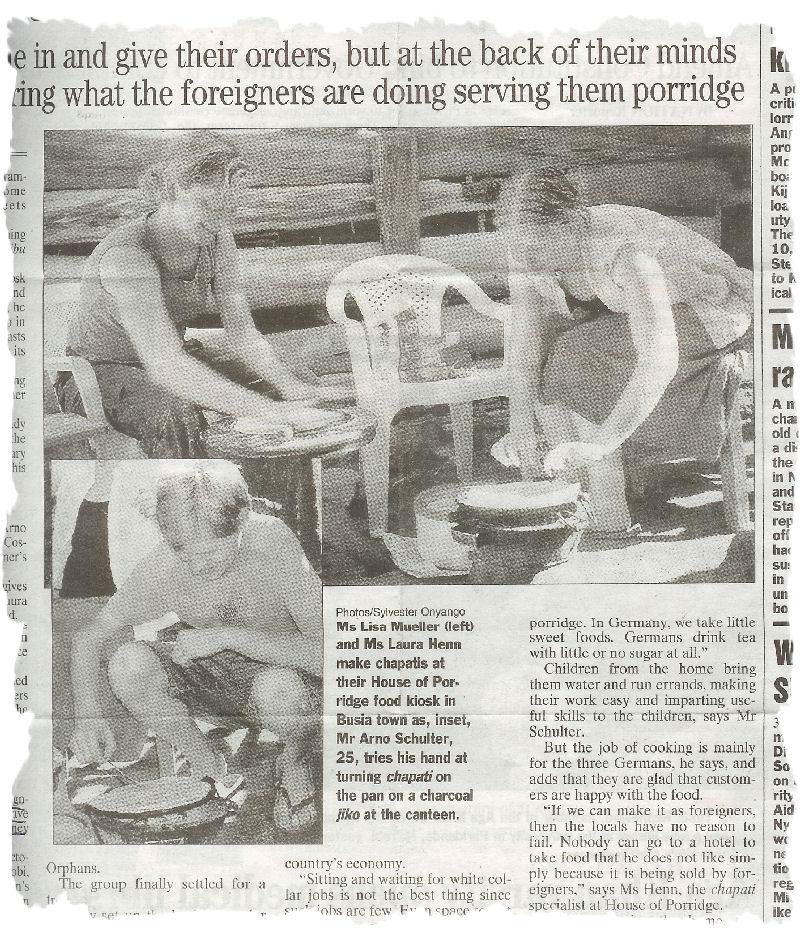
My local correspondent Mbuzimoja today forwarded this hilarious story from the Daily Nation (page 17, April 6, 2006) to me, a story about a group of Wazungu (…) from Germany who opened up a food kiosk in BUSIA TOWN (!) “that boasts tea, chapati, potatoes and porridge on its menu”. They call it “House of Porridge”:

foodzungus.jpg

Customers “can only conclude that the foreigners are stranded in Kenya and have opted for the business to raise money for their tickets back home” …. “most people thought the food kiosk was not a business fit for the foreigners, after all they had enough money to start a big venture. Ability is wealth?

Ms Lisa Mueller, Ms Laura Henn and Mr Arno Schulter – all in her mid-twenties – came to Kenya in October 2005 to work as volunteers. The food kiosk, the article says, serves as an income generating project. A neat idea, I think. Why not?

The story reminds me of a Kenyan Lady by the name of Rachel Kamau who runs a nice & comfy Kenyan restaurant in Freiburg, Germany (I’ve mentioned earlier last year).
“If we can make it as foreigners, then the locals have no reason to fail. Nobody can go to a hotel to take food that he does not like simply because it is being sold by foreigners”, Ms Henn is quoted in the article.
Well well well….some ppl have the freedom to choose while others just need to survive the next day. On the other hand, though, my reason for blogging this amusing story is that it highlights the difference in thinking. Whereas these Gaamaaaans just came to Kenya to help and work (and I think I’m not much different from that, at least they are showing this business approach), the typical Kenyan reaction in the first place is “ati, can’t they afford to go home?”.

Sometimes I am so sick of this stereotyped thinking. As much as I never questioned the opening of that Kenyan restaurant in Germany, I sometimes wonder when these “mzungu, mzungu…give me shillingi…” cries will stop whenever a white person enters a black village. Harassment, from the other perspective. Similar to that, it’s like me joining the Kenyan Blogosphere and then ppl approach me and comment like “oh, I didn’t know you are white”. Well, SORRY that God has given me this skin colour?!
I mean, what I am supposed to answer on such comments? Dito Kenyans of Indian Origin – when will we start accepting each other without looking at ancestry or tribal origin? Me, me I am just JKE :-)

Notizen eines Tages

1. Auf dem Weg zum Bahnhof bietet sich folgende lustige Beschäftigung an:
wir zählen die Kleinwagen mit Gedöns am Rückspiegel.Pro Diddl-Maus gibt es extra Punkte. Meine Begleitung heute vermutet einen direkten Zusammenhang zwischen blinkenden Handy-Anhängern, Rückspiegelgedöns und Berufsgruppenwahl (Bürokauffrau oder Arzthelferin?).

2. Die BILD Zeitung beim Bäcker zeigt einen verschlafenen, unrasierten Oliver Kahn. Schlagartig fallen mir Dittsches Worte von letzter Nacht ein: wir müssen etwas gegen die Soziale Kälte in Dland tun. Ab auf die Bank mit dem Kahn, da gibts wenigstens warme Decken.

3. “Ausstieg in Fahrtrichtung rechts…äh…links. Der Metronom. Schön.
Aber nicht Uelzen.
Ich sach ma so: die Stadt Uelzen hat den Charme eines Flures im Finanzamt.
Zurück zum Metronom. Das Zugpersonal suggeriert das Prinzip des job-rotatings – Zugführer gegen Schaffner, dann klappts auch besser mit den Ansagen.

4. Ankunft in Lüneburg. Ein Glück. Willkommen in der neuen Welt. Zurück in der Zivilisation.

5. Nach einer konfusen Shoppingtour einen Abstecher im Lokal zur goldenen Möwe gewagt. Am Tresen neben mir ein ca. 19jähriger, der sich ne fette McFlurry Portion mit Smarties bestellt. Na guten Tach auch. Heimlich male ich mir aus, wie neben den Burgern Werbung für SchönheitsOPs MP3 Player angeboten wird. Die Zielgruppe wäre zumindest vorhanden. Point Of Sale. Bitteschön.

6. Besuch in einem “Erotikgeschäft für Frauen”, in dem eine Kommilitonin jobbt. Ich sehe eine ca. 40 jährige Kundin, die eine halbe Stunde im Laden verweilt, um sich dann mit diversem Spielzeug für 94,- EUR einzudecken. Ich wundere mich über die Selbstverständlichkeit, mit der die angebotenen Artikel großzügig gekauft werden – und über die recht hohen Beträge.
Während ich noch darüber nachdenke, werde ich gebeten, der Besitzerin bei der Bestattung eines toten Meerschweinchens zu helfen. “Wo soll ich denn damit hin? – In den Müll…”. Ja nee, is klar.

7. Bei C&A in der Herrenabteilung gibt es günstige Sakkos, leider nicht in meiner Größe. Dito H&M. Dito Karstadt. Vor allem H&M, also wirklich, ma soogn: wieso ist XL bzw. Größe 106 immer ausverkauft?
Bei C&A noch Bekanntschaft mit einem älteren Ehepaar gemacht, bei dem die Frau ihrem Mann ein furchtbar häßliches, tomtatenfarbenes Sakko mit Karomuster andrehen möchte. Ich kann mich nicht zurückhalten und gebe meinen Kommentar ab: ja schon schön, aber bitte, nicht diese Farbe. Aus Anstand erwähne ich natürlich nicht auch noch, dass das tomatenrote Sakko die gleiche Farbe aufweisst wie die rotangelaufene Glatze des armen Ehemannes. Notiz an mich selber: Frech kommt weiter, aber gegen den guten Geschmack einer Ehefrau komme ich einfach nicht an.

8. Irgendwann am Nachmittag wage ich die Rückfahrt im überfüllten Metronom. Neben mir zwei ältere Damen aus gutem Hause, die sich angeregt über einen expandierenden Kiosk in Uelzen unterhalten, während sie genüßlich ihre Fischbrötchen von GOSCH-Sylt aufmampfen. Vor mir ein Gothic-Pärchen, beide jeweils sehr vertieft in ihre Fantasy-Romane. Ich schaue aus dem Fenster, genieße den Ausblick und erkenne, dass ich für die relativ kurze Zugfahrt keine Lektüre brauchen werde. Die schönsten Geschichten schreibt das Leben.
Später dann erwische ich mich dabei, wie ich schon wieder Details für meinen Kenia-Aufenhalt plane. Deutschland – so nah und doch so fern. Kenia, so fern und doch so nah. Bald.

9. Ausstieg in Fahrtrichtung rechts. Der Schaffner schnackt lieber mit seiner Kollegin als nach meinem Semesterticket zu fragen. Egal. Ich steige aus und laufe nach Hause. Die Zugfahrt erinnert mich an meine Zeit in Frankfurt – morgens mit der U-Bahn vom Dichterviertel zur Konstablerwache, abends zurück. Ich denke an meine Freunde in den anderen Metropolen dieser Welt und überlege, welches volkswirtschaftlche Volumen der tägliche Pendlerstrom in einer Stadt wie Nairobi hat.

10. Der FTP Server im Wohnheim streikt immer noch. Nachdem die Waschmaschine ihren Dienst versagt und meine 1,50 EUR in 50 cents Stücken ergebnislos verschlingt, starte ich den Server neu und mounte die Festplattenpartitionen.
Ein Erfolgserlebnis, alles klappt.

11. Ich sitze am Rechner und tippe diese Zeilen. Ich denke an Baggi in Kathmandu, an Tembomoja und ihr Visual Basic for Applications Problem, an Mbuzimoja und den Regen in Nairobi, an Irena und ihre Schwierigkeiten, und an Mwendes Worte letztens, drüben in ihrem Blog: “We are blessed.” So true.

Waruku

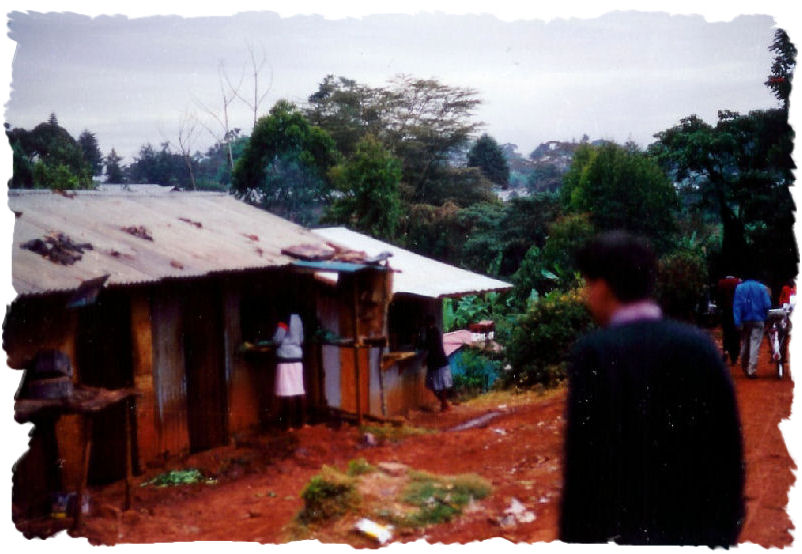
I was taking down some pictures from the wall because I am planing to move out of this place a.s.a.p. and came across some pictures my sis had prepared for and presented to me as a collage some years ago. The initial plan was to stick them into my sketchbook(s), which is my very own way of personalizing memories…

Sooo…while going through these pictures, I found the following snapshot, taken in Waruku, Kangemi, Nairobi, Kenya:

kangemi.jpg
Who’s this? :-)

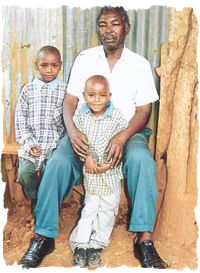
And of course, being the caaariiaas (curious) mzungu freak, I googled for “Waruku Kangemi” and came accross this interesting & sad story, featuring the following picture of a very very good old friend of mine:

kamau.jpg
Mzee Stephen Kamau wa Gitau with his grandchildren.

You know, I thought he’s already dead. Now, since I know he’s still around, I shall try to visit him when I am back in EAK sometime in May ’06…. Ikinya r? m?k?r? r?kinyaga m?runa.

World Water Day 2006

auto_01_popup.jpg
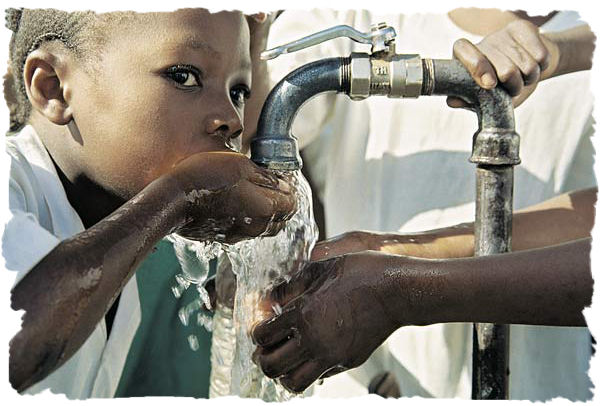
  • 1.1 billion people lack sufficient access to safe drinking water.
  • 2.6 billion people lack access to basic sanitation.
  • 6,000 children die every day from lack of safe water or poor hygiene.
  • On average, African and Asian women have to cover 8 kilometers a day to get fresh water.
  • The average African lives with less than 20 litres per day while the average European consumes more than 150 litres daily and the average North American more than 300 litres.
  • 4 billion hectares, representing 1/3 of the emerged lands of the globe, are threatened by desertification.

Today is the World Water Day 2006 and I will take this opportunity to inform my esteemed readers of a water related project to contribute my share on this topic:

The United Nations Educational, Scientific and Cultural Organization (UNESCO) is this years UN agency to coordinate events surrounding World Water Day (WWD) around the world – and this years theme is "Water and Culture". Well, water and culture? What does that mean?

According to the director general of UNESCO, Mr Koïchiro Matsuura, "technology alone will not lead us to viable solutions" on the world’s urgent water problems but instead "we must better understand the complex interactions between societies, water and the environment". And he goes on saying "water management itself needs to be understood as a cultural process….(…) …The nexus between culture and nature is the avenue for understanding resilience, creativity and adaptability in both social and ecological systems."

Or, to put it in my words: in order to have a positive impact on the world’s urgent water problems, we can not just apply various technologies while hoping that things might work out. Instead, we first of all need to comprehend the connection between the environment and our social systems. Of course, a relatively simple approach – which is still often neglected.
The basic idea behind this is to identify a causal framework which will help to deal with the various and complex water problems the world is facing today and in the future. And this is where the UNESCO’s programmes come into limelight:

The UNESCO, which btw celebrates it’s 60th anniversary, started developing international projects and programmes to improve our understanding and management of the earth’s resources.
One of these projects I would like to focus your attention on is the "from Potential Conflict to Co-operation Potential" initiative – which is one of UNESCO’s International Hydrological Programme (IHP) contribution to the World Water Assessment Programme (WWAP) in cooperation with Green Cross International (GCI).

Conflicts?
Over 260 river basins are shared by two or more countries. To date, the UNESCO’s International Shared Aquifer Resource Management project (ISARM) has inventoried over 150 shared aquifer systems with boundaries that do not correspond to those of surface basins. Approximately one third of those basins are shared by more than two countries, and 19 involve five or more sovereign states. Of these, one basin – the Danube – has 18 riparian nations. Five basins – the Congo, Niger, Nile, Rhine and Zambezi – are shared by nine to 11 countries. The remaining 13 basins – the Amazon, Aral Sea, Ganges-Brahmaputra-Meghna, Jordan, Kura-Araks, Lake Chad, Mekong, Neman, La Plata, Tarim, Tigris-Euphrates and Vistula (Wista) – have five to eight riparian countries.

The PC-CP project addresses the challenge of sharing water resources and its role is to help water resources management authorities to tip the balance in favor of co-operation potential away from potential conflict.

For its current 2nd phase, PC-CP has determined the following operational objectives to strengthen the capacity of the target audience in dealing with potential and actual water conflicts :

  • The development of educational material related to conflicts and cooperation in the field of shared water resources;
  • The development of appropriate institutional frameworks for the anticipation, prevention and resolution of water conflicts;
  • The development of methodologies for conflict prevention and resolution;
  • The improvement of legal tools for the management of shared water resources;
  • The development of a comprehensive information system on water conflicts and cooperation;
  • The dissemination of results and best practises at a global level.

So the bottom line to all this is that there are good and well elaborated programmes and projects in the pipeline that include a more holistic approach to today’s water problems. I am specially interested in the development of a comprehensive information system, and maybe today’s blog on this matter has slightly contributed to informing the public about these issues.

Please don’t miss today’s launch of the 2nd United Nations World Water Development Report (WWDR2) in Mexico City, Mexico. Thx! :-)

(deutschsprachige LeserInnen seien an dieser Stelle auch noch auf folgenden interessanten Link zum Thema Weltwassertag hingewiesen)

sanitation is dignity

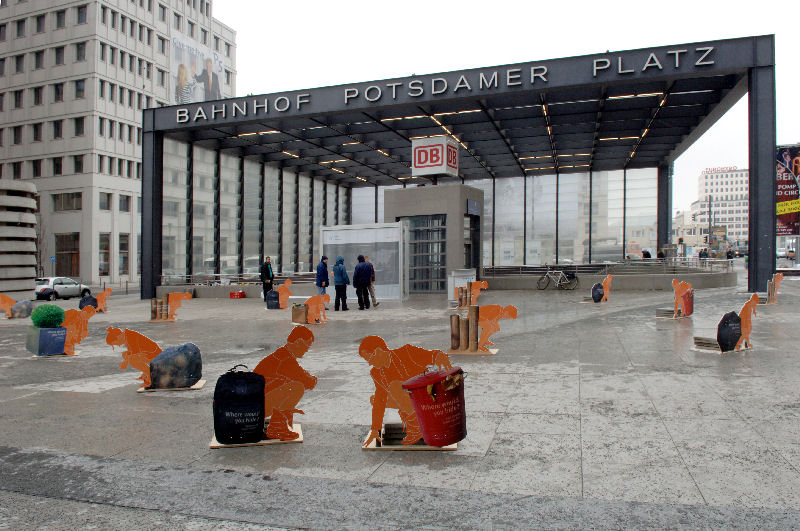
gto2.jpgThe german print media recently covered the interesting initial public start of an international organization – the German Toilet Organization (GTO) – here in Germany which main objective is to lobby for more (public) toilets and improve access to clean sanitary needs worldwide (the pic to the left shows the recent “sanitation is dignity” exhibition on Potsdamer Platz in Berlin, Germany as organized by the GTO – pls click to enlarge).

Toilets, choo, restrooms, latrine, lavatory – you name it.

Well, you name it? What kind of words do people use when they try to express their need to “take a natures call” or have to relieve themselves? The problem starts with the fact that we – we as in people world-wide – don’t even like to talk about these issues. It’s a taboo that keeps on being ignored, yet going to toilet is just as natural as eating or sleeping. And in order to improve the sanitary situation worldwide, first thing we need to do is to start talking about this issue.

The shocking truth is that, according to the WHO and UNICEF, roughly 2,6 billion people (around 42% of the worlds population) don’t have access to a working (read: adequate) sanitary system – and with an ever growing population and a clear need for an improvement, something has to be done. Soon.

“Proper sanitation protects water resources, increases health, provides dignity, increases agricultural production, can be an energy resource”….wait! It increases agricultural production? How come?

The problem with waste water treatment in huge treatment plants starts with the initial problem that we – the users – flush down virtually anything down the toilet. Out of sight, out of mind? Maybe… However, the results of these daily actions are that we get to have this huge mixture of waste and nutrients that require a lot of process engineering and energy to be separated.

==> We are using electrical energy to treat our waste. How crazy is that?

Now, what’s with that argument that an improved treatment could increase agricultural production? Let me please (try to) explain:
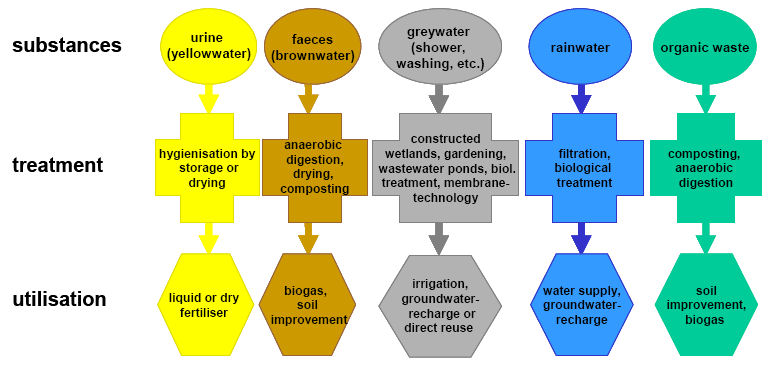
Instead of re-thinking complicated and expensive ways on how to separate this horrible mixture, let’s directly go to the root of the problem and separate the urine from faeces and greywater where they are being mixed up: at the toilet. There are some toilet designs out there that come with a built-in separation system – just think of a bowl that has an extra outlet for the urine and you get the idea.
By doing this, we receive an almost homogeneous, separated material out of which we can then recover nutrients, trace elements and even energy. Think of phosphor, this fertiliser stuff we put on our fields & gardens: the world-wide resources are limited, yet some countries (like Nepal) still invest a lot of money to import it although we could just recover up to ~40% of that phosphour from our urine.
gto3.jpg

In fact, the German Agency for Technical Co-operation (GTZ) started (among others) an initiative to promote this idea of closing nutrient loops some years ago and have shown great progress in promoting this much needed approach to fulfill the Millenium Development Goals set by the UN. They call it ecological sanitation (ecosan) and to emphasize a systematical approach to this paradigm shift, they have published a source-book (PDF, 9 MB) as well as other useful information material that will help to promote this great idea of ecological sanitation.
Mind you – ecosan isn’t just a technology or a technical approach to bugging issues. It’s a philosophy and understanding for the challenge which we’ll have to face in the 21st century: closing biological cycles/loops. Among the key issues of ecosan as documented in the so-called Bellagio Principles, we find the following definition:

Waste should be considered a resource, and its management should be holistic and form part of integrated water resources, nutrient flow and waste management.

• inputs should be reduced so as to promote efficiency and water and environmental security
• exports of waste should be minimised to promote efficiency and reduce the spread of pollution
• wastewater should be recycled and added to the water budget

And yes, I am very passionate about this subject and as I’ve mentioned earlier, the challenge I see for us in the 21st century will be to re-design the products and technologies we’re using on a daily basis so that every material remains in a biological or technical loop / cycle. No more end-of-pipe technologies but cradle-to-cradle designs with materials that remain as nutrients to future generations. There is so much technology out there and it starts with generating an awareness for the biological cylce – something our forefathers already knew and we apparently forgot with todays products. Also, this isn’t just one of those ideas for the drawers of development aid – this is an approach on a global basis that sees various implementations in e.g. Europe as well as in Asia or Africa. The technology is already applied – even in Kenya – and in fact, I am planing to promote this even more when I am back in Kenya.
(@GTZ: I AM YOUR MAN ON THIS…hint, hint ;-)

Coming back to the toilet issue, please have a look at the website of the World Toilet Organization to find out what YOUR options are to make a change – now. Thank you!