ignorance

It already started with my arrival in the office as late as 10 am – being deeply in thoughts about which CMS may be adequate enough for this little project I am currently working on, I missed the right train and ended up taking another one which dropped me at the airport. Wrong direction!

Then, at 11 am, a meeting with smart ppl left me a bit frustrated, as these dudes & dudettes once again celebrated and elaborated on e.g. how to define an expression? like “capacity building” on their sector for the interested public.
Well – working in this dev aid environment sure is an interesting opportunity and I really love? what I am currently doing (because of the sustainability background & involvment of IT & environmental engineering), but a lot of these things – these things that involve the production of unimportant papers and justifications for various actions taken? – are just as obsolete as the thousands of other bureaucratic barriers the world doesn’t really need. Because there’s no positive impact. It doesn’t make a difference. Those targeted don’t need papers with explanations.

Anyways.

Bill of “Jewels in the Jungleactually sumarized? it pretty nicely – on one hand the G8 meeting in Hooligendamn, and on the other the ongoing TEDGlobal2007 conference in Arusha. Two worlds?

Interestingly, the very same smart ppl as mentioned above from my meeting here this morning – those who are making plans for developing countries nations -? never even heard about? TEDGlobal.? Ignorance, as mentioned before?

I just told my one Israeli colleague “uka haha”, which is Gikuyu for “pls just come here”. After realizing that he didn’t understand a single word, I decided to blog? this frustrating day -? hoping it would have a therapeutic effect on me. *sigh*

But then,I still can’t lose the feeling that the Eurosphere has (at least) a? slight ignorance for the Afrosphere -? which? would be? a big mistake, I think.

ucheshi wa mtoto ni anga la nyumba

In a world where bad news are good news, it’s about time for some really good news that show us something else instead.

My sweet and beloved niece is celebrating her 2nd birthday today, and while she was busy unpacking all her many presents, I couldn’t help but thinking of those many kids that have to share their toys with others. As soon as my niece grows up, I will teach her the joy of sharing.

One of those places dominated by kids and lots of love is The Nest Home in Limuru, Kenya. The Nest Home is “a Project for the Rescue, Rehabilitation and Integration of Children in Conflict with the Law & Children of Imprisoned Mothers” and was founded some years ago with the help of many different people who all contributed to this worthy cause.
The children’s orphanage is located about 20 km outside of Nairobi and provides a loving home for those less fortunate, who’s parents are either in prison or dead.

Nest
screenshot of The Nest Home’s website

The fact that their website currently runs on my webspace actually prevented me from blogging on them for a long time, as I didn’t want to be biased on this. There are in fact many wonderful experiences I could put here, lots of joy I encountered while visiting the Nest last year. This is such a wonderful place!

As MB, who diligently maintains the website, already mentions on one of the pages: there are many ways YOU can actually help these kids!

On a very personal note, and why I decided to blog about this anyways:

  • fellow blogger AfroM recently informed me that she, Hash, Mental and others are having plans to visit The Nest soon – great! :-)
  • we’ve built this website (running on WP) not only to inform others on the project, but also to show the transparency of the project and that the persons in charge don’t “benefit” in any (financial) way as some sceptical pundits might assume for whatever reason or so…
  • i really appreciate the “ownership” from the Kenyan side, and how locals in Limuru have started to acknowledge the home being inside their community.
  • i recently read this note on the Cutting Edge @ the DN on fathers who want to do some DNA / paternity test to see who’s the real father of their children. now that’s so stupid! that’s exactly why some of these children have never seen their fathers. Being a father, I believe, isn’t about having a coherent DNA with your kid, but about giving it the love it needs. I actually changed my mind on adoption after visiting The Nest Home.
  • maintaining a website in at least two different languages isn’t easy, as some contributions come from countries like Germany where not everyone (especially the older generation) speaks English. The challenge is to include all audiences and showing them how their contributions are being used for the benefit of the children.
    I know many critics will mix up Charitable Trusts with overfunded NGOs, but I can assure you that The Nest Home has a remarkably low expenditure on overhead costs.

nimekuchagua wewe

Ingawa wapo wengi wazuri mamiii, lakini nimekuchagua wewe, tabia zako sawa na sura yako, nimeridhika kuwa na wewe…(“Afro”, Les Wanyika.)

It was a blessed morning, and something had made me get up early. Last night’s dream brought back pictures of an older Nairobi , the city whose sights & sounds had been lingering in my head for a while. For quite a while.

Finished watching “The Last King of Scotland ” last night. Despite of the story that somehow tries to paint a closer picture of Idi Amin’s rule in Uganda, one thing about that flick instantly made me fall for it: Ishmael Jingo ‘s “Fever” – a track the world has been blessed with since Duncan Brooker (where are you, man?) unearthed it some time ago and put it on his still marvelous “Afro Rock Vol.1” compilation we had been talking about earlier .

If there’s one thing that best describes situations, it should be music.

Ryszard Kapuscinski, the legendary polish journalist that died earlier this year just a few days after my Mzee, added another point that had left me thinking. In his book “The Soccer War“, he mentions the bars and pubs people had been attending during those days back in July 1960 when Patrice Lumumba was the man. Kapuscinski, who was supposed to fly to Nigeria only, took a flight to Cairo instead, another one from Cairo to Khartoum, and from there he and some other journalists somehow managed to drive into a completely lost Congo.

Would you take such a journey upon you only to spend the biggest time of the day locked up in a hotel somewhere in a boring 1960 Stanleyville , or Kisangani as it is called nowadays?

“The African Bar”, Kapuscinski goes on explaining Lumumba’s approach on people, “is like the Roman Forum (…). This is where people started listening to Lumumba’s speeches…(…)”.

So you’re sitting there, reading these lines and thinking to yourself: did this actually change since 1960?
Maybe there are less idealists out there since Lumumba – and where Kapuscinski still talks of Partisans who fought for uhuru & other theoretical goals, today’s world seems to be made up of HipHop proclamations and cyberwars. Welcome to the 21st century.

It’s one of those days that I start dreaming and think about how life must have been in the 1970s Nairobi. Life, as in nightlife. Clubs? Music? Styles?

It certainly was different from what I witnessed while growing up in a very futuresque Tokyo (Japan) in the 1970s. And what exactly is it with Nairobi – this once “Green City in the Sun”?

“Nairobi”, the lady asked me, “why would you want to live in a city like Nairobi? I stayed there for a few month and didn’t like it. All those houses with barbed wires and high fences – I wouldn’t like living behind a fence…”“Well”, I replied, “neither would I…but maybe you never saw its real beauty” .

Home is where your heart is, and mine is still somewhere out there (with a very Kenyan “somewhere there”, the hand pointing in no particular direction).

@AfroM & EGM: what happened to the Nairobi Architecture Group? Maybe a FlickrGroup?

AOB: doing a search on Nairobi via del.icio.us reveals blogs like Paul‘s that somehow remind me of my own blogged worlds (this & this, this & this, etc.)…his blog definitely is a must-see for all Nairobians in exile! :-)

fake usb sticks

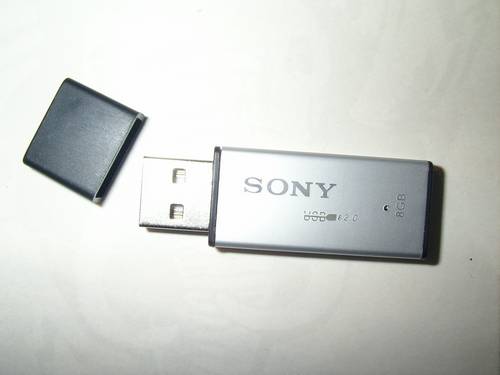
A friend of mine recently travelled for business to Guangzhou in China and was offered the following USB flash sticks at a size of 8GB each.

SANY0005

At a price of about EUR 11,- ( ~0,73 EUR/ MB) each, he quickly decided to buy two sticks. Since he was afraid of being lured into bogus deals by conmen (hey, China is evil :-), he asked for some testing – and on the salesman’s computer, these sticks just worked fine. Windows declared their size at 8 GB each.

Upon returning home, he quickly realized that these sticks actually only offer 16 MB each. 16 MB vs. 8000 MB. What a bummer!

Some quick googleing revealed the following information on the Ebay user forum:

More than 95% of all 1GB, 2GB, 4GB and 8GB USB Flash Drives listed on eBay are counterfeit items and have ‘fake’ capacities. 100% of all 16GB and 32GB USB Flash Drives are FAKE.

They were reprogrammed from much smaller cousins 128MB, 256MB and 512MB capacity drives for quick profit!

Difficult to differentiate visually, as they look like cousin to a real mccoy. Most of them even have brand new packaging, serial numbers like a real mccoy. (source)

And further down it says:

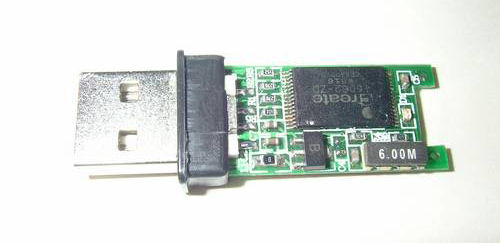
A very high percentage of the counterfeit flash memories are using Hyperstone and iCreate memory controllers, instead of the original manufacturer’s own memory controller!

Aii??

SANY0008

Now what’s that? An iCreate controller chip, isn’t it? Bingo!

And the article also informs us that “you MUST perform data test by writing a BIG (1GB/2GB/4GB/8GB) file to the usb drive, then READ back the same file from the usb drive to another location on your PC to compare. The READ back process is the only proven way to uncover its ‘REAL’ capacity.”

I am mentioning this because I know USB flash sticks have become very popular all over the world, and while I dislike them for security reasons (import of viruses to computers, quick theft of sensitive edata from companies, etc.), I also know that some of these fake sticks have been sold in Kenya as well.

Someone at our office in Embu bought a bunch of Sony “Vaio” (LOL!!) sticks in the past, and those sticks quickly quit working properly. Upon opening, we found them being made in a very cheap way and any bigger memory chip was in fact missing. And those were 1 GB sticks each which were by that time procured for a price of about Ksh. 5.000 – per stick! Argh!! Also, the office is part of the MW&I, so there you go, wondering who would actually want to cheat the GoK, and, indirectly also the rest of Kenyans.

So please, if you feel that your USB stick isn’t working the way it is supposed to be, or if you want to avoid any future problems while buying that neat 1 GB stick in downtown Nairobi, pls use a programme like this one to double check them before purchase. Might help to avoid some frustrations…

Ahh, this btw also applies to (fake) memory cards!

More on this here, here and here.

bridging the gap

Bridging the gap between the things you do, and those you only think about. Bridging the gap between the stuff you write, and the stuff you would like to write about more often.

„So what makes you special, why should I employ you and not someone else from Kenya? Why shouldn’t I employ a graduate from Kenyatta University with a Master degree, pay him around 4000,- EUR and maybe get the same results?“, the lady asked me on that job interview.

She had been to Kenya before, and knows the country to some extent. She’s in charge of a huge programme, and remains focused on the basic needs. A good, diligent worker who achieved a lot during her career. I respect her.

„Because I speak German“, I replied, „and because I don’t feel bad about the simpler work that has to be done sometimes. And because I’ll instantly fix your computer problems and get your team into operation….”

There’s no logical argument why I should be employed instead of a local person unless my marks are better. But they are not.

I also explained her that my German Abitur (A-Levels) back then was achieved under different circumstances, and that I really worked my ass off to get this stupid paper. Same as with these studies – I’ve seen so many people who really delivered good theoretical work, but didn’t know anything about practical stuff. Pls, don’t get me wrong – I don’t want blame anyone for my situation – but since those guys and gals set the standards, it also explains why we so often find assimilated workers in office jobs. People who just play by the rules and have learned to stick to their Terms of Reference only. People who never risk their job for what they believe in. Either because they are cowards, or because they need the job to pay for their families, etc.

Life, it seems, is about bridging the gap between such insanities and remaining focused on yourself.

And then, when I left the premises, I remembered my Kenyan friends telling me how much more Kenyan I am compared to them. Well, when it comes to work permits and payments, I am reduced to my passport and my marks. It is a fair system, which still ignores a lot of practical experiences. Should I have told her that I am “so Kenyan”? :-)

But then: many others depend on such a job, because they can’t do anything else. I don’t. I will make it to Kenya, with or without these companies. But going to Kenya isn’t my dream.
FFM
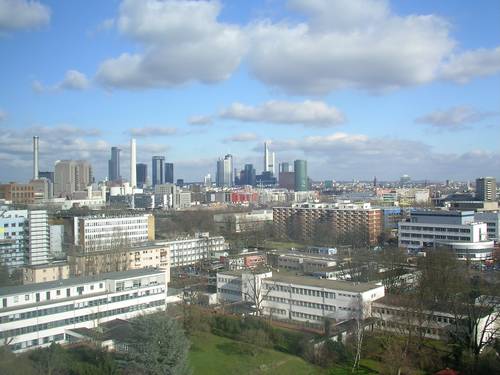
“a room with a view” a.k.a. the beautiful skyline @ Frankfurt am Main as of Feb 15th 2007….there is some love-hate-relationship i am having with this city. strange.

„There are four obstacles on your way to fulfill the dream of your life“, Paulo Coehlo wrote in the preface to „The Alchimist“. The first one is that still as a child, we’re told that our dreams will never become reality. The older we become, the more we try to hide it. We’ve accepted it being a dream, and remaining as such.
And then there is love. „We mistake the love“, he writes, „as an obstacle, but instead it is an additional motivation, and those who really love us, will come along“.
The third obstacle is the fear of the numerous defeats we may encounter on our way to happiness. Often, we seem to be afraid of those failures.
The fourth obstacle, he continues explaining, is about the fear of seeing our dream come true. After all those years of fighting and struggling to make the dream come true, people tend to relinquish, to give it up because they are afraid to also lose their motivation which made them go for that dream.

This small book was given to me by a dear friend, because she wanted to share this little source of wisdom with me. It’s a nice book, but then – I stopped reading it at the most exciting part because something bugged me. Something I couldn’t relate to.

The author talks about dreams and people who often miss their way to happiness and fulfilling their dreams. Only – I don’t have a dream.

I am happy with myself, I am strong and I know that I shouldn’t worry about my future because there will always be a way out of miserable situations. And as a consequence of this, there’s no dream I urgently want to fulfil. Small things maybe, small things here and there, some materialistic, some concerning my studies and some also concerning mapenzi-issues. But still, THE dream (the one and only) isn’t there.

It irritated me. Instead of a wise author trying to tell his readers a nice little story, I was waiting for that advice on how to make deciscions. I am having problems to decide. Particularly here in Europe where the choices are so many. For instance, shopping is a problem. In Kenya the range of available products is often limited (and I don’t need more), so the actual process of deciding upon certain things is much easier. I like that. Keeping it simple. But life isn’t about shopping items you may return if you don’t like them.

Life is about making decisions all the time. Decisions that indicate the difference between childhood and being an adult. But how do you know that your decision was the best?

You can’t know that in advance. So I just applied for another internship (with that above mentioned company!) which should pave my way back to Kenya. I think I will never know the truth if I remain being afraid of making the right decisions. After all, I should be glad about all those different chances I am having right now (good background, broad education, no flat/home/rent, no car, limited obligations – all those things that push most of the sad faces I see in the morning hours out of bed because they have to earn a living and keep on dreaming).

I am trying to bridge the gap between a student’s life, and setting up the framework for a secured future. Also, I am very curious to see where I am in, let’s say: 10 years time from now? Because right now, I am open to everything. And that’s my little precious treasure. Real freedom (uhuru).

Cheers!